OpenAI scraped Codex for breakthrough and issued career threats
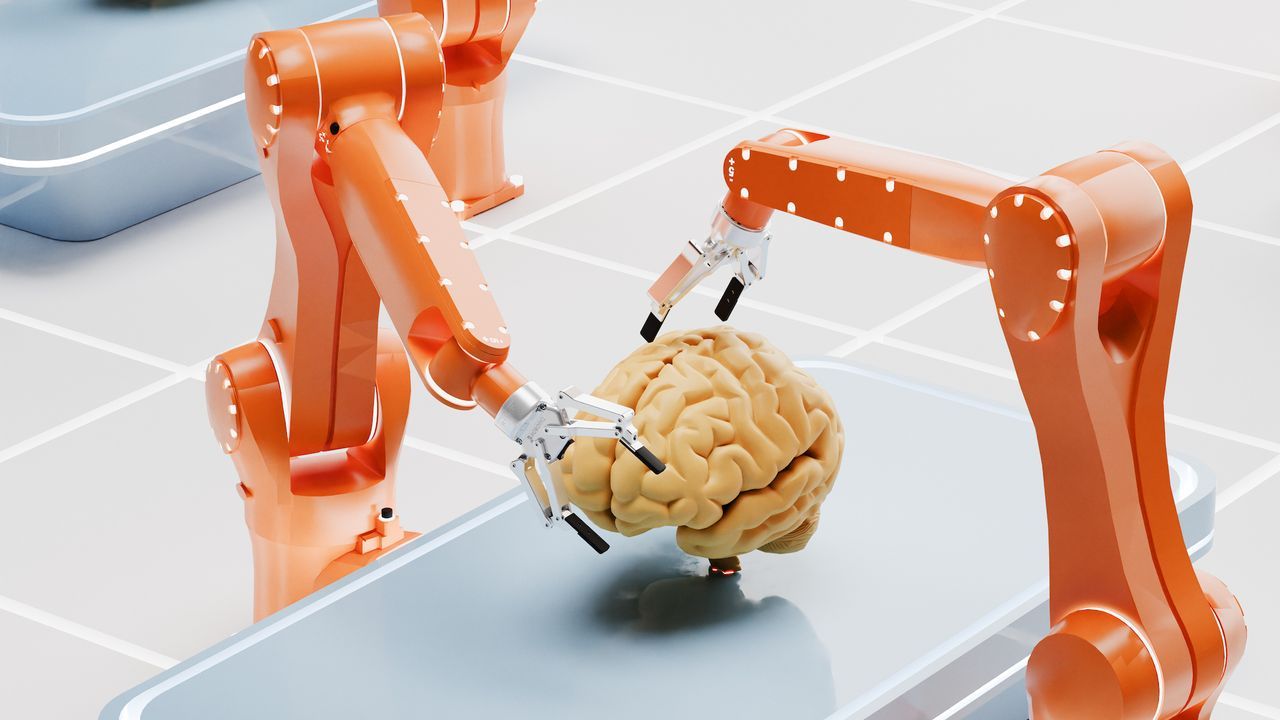
The AI Race for Mathematical Immortality: Who Really Solved the Navier-Stokes Riddle?
The world of mathematics is buzzing with monumental questions, chief among them the Millennium Prize Problems, which promise a million dollars and eternal fame for solving them. At the heart of this pursuit lies the formidable challenge of proving whether the Navier-Stokes equations have smooth, globally defined solutions. Now, the focus has shifted from pure theory to the cutting edge of artificial intelligence, pitting corporate claims against academic history in a high-stakes intellectual showdown.
OpenAI has recently made a bold claim, suggesting that its internal models and staff have managed to solve the conditions surrounding Navier-Stokes solutions. This announcement, however, has immediately ignited controversy. The excitement over the AI’s supposed breakthrough is shadowed by accusations that the company might have taken credit, or worse, plagiarized the groundwork laid by independent researchers.
The controversy stems from the quietly intensive work of Tristan Buckmaster and Levent Alpöge. For nearly a year, this pair were dedicated to proving related, stepping-stone problems, specifically Euler’s equations, which are foundational to understanding Navier-Stokes. Their collaboration was a personal endeavor, utilizing advanced tools like Anthropic Claude and OpenAI Codex not just for documentation, but to navigate the complex logic steps required for their proofs.
Through sheer dedication, the team achieved significant milestones, obtaining “blowup results, with smooth forcing, for both Boussinesq and Euler.” Their novel approach demonstrated a deep understanding of the mathematical landscape, and their findings were verified using formal proof systems designed specifically to check mathematical rigor.
When the internal results were shared, Buckmaster found the AI-generated proof highly unsettling, describing it as “AI slop,” yet the mathematical validity was confirmed. This discovery quickly escalated into a complex negotiation involving OpenAI and the research team, forcing a confrontation about ownership, credit, and the role of machine learning in scientific discovery.
The dispute deepened when rumors suggested that Anthropic may have reached a similar breakthrough, prompting an exchange between Buckmaster and OpenAI representatives. The dialogue centered on a crucial, contested point: whether the AI’s findings stemmed from the model’s general knowledge or from the specific, nuanced path chosen by the human researchers. Buckmaster argued that the successful approach was not easily derived by simply inputting the problem into a bot.
Ultimately, the core tension remains unresolved. While the scientific community awaits years of rigorous peer review before any party can claim a Millennium Prize, the underlying issues of data usage and authorship remain fiercely debated. The saga highlights a critical, ongoing question about the intersection of corporate innovation, data privacy, and the fundamental nature of scientific credit in the age of powerful artificial intelligence.
Buy on Amazon
Credit