Programmer runs Doom on C64
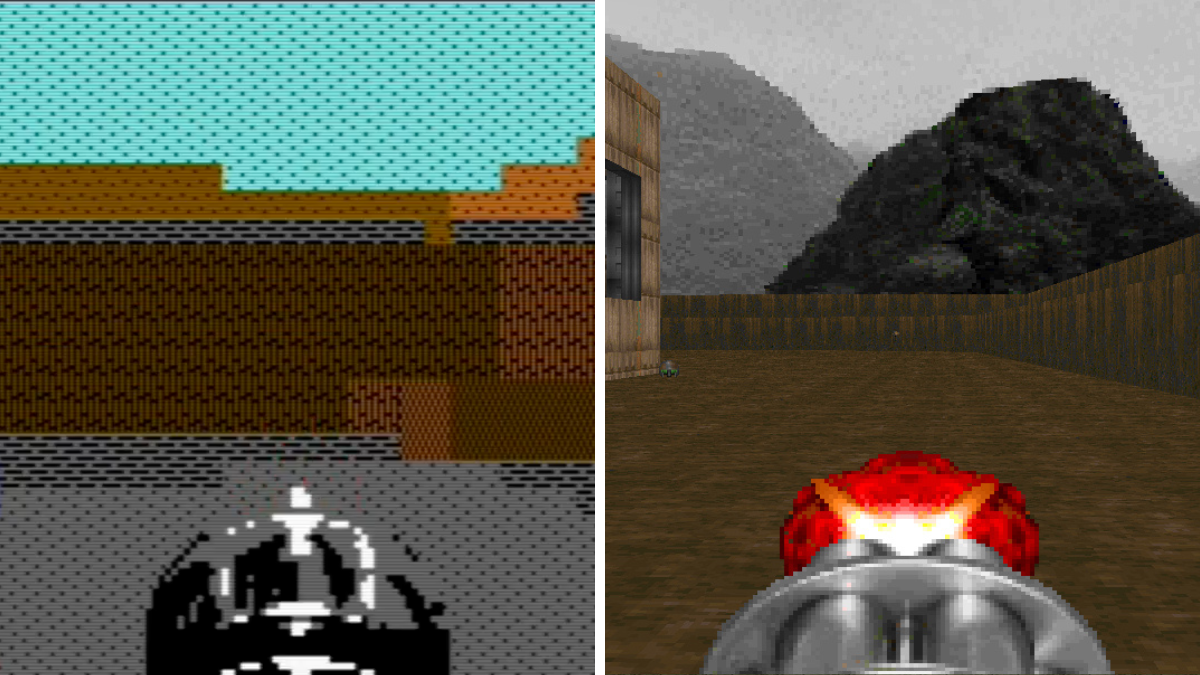
Revisiting the Classics: How One Programmer is Building Doom for the Commodore 64
We all remember the golden age of 8-bit computing. While modern gaming sprints into hyper-realistic 3D worlds, there remains a fascination with the foundational systems that birthed digital adventure. Yet, even in that era of constrained technology, true innovation can emerge. Enter Steve McCrea, an engineer and programmer who is not just looking back at history but actively rewriting it by attempting to bring the legendary first-person shooter, Doom, to life on the Commodore 64.
The challenge of porting a demanding experience like Doom onto vintage hardware is formidable. But McCrea’s approach sidesteps simple translation; it’s an ingenious exercise in retro-engineering. His project isn’t a straightforward graphical conversion, but a clever mathematical feat. He is utilizing ray casting within a tile grid system, drawing upon the foundational code he originally developed for his own dungeon crawler, The Keep, which was designed for the earlier Commodore VIC-20.
While other early attempts often resulted in flat, grid-locked mazes reminiscent of titles like Wolfenstein 3D, McCrea’s vision for Doom on the C64 is dramatically richer. He introduced dynamic elements that breathe life into the environment, including variable floor and ceiling heights, working elevators, opening doors, and even visible weapons for the player to interact with.
This level of detail transforms the experience from a static maze into a genuine dungeon crawler. The visual work-in-progress is already impressive, showcasing advanced features like dynamic lighting and a full skybox—elements that push the boundaries of what was considered possible on the 8-bit machine. McCrea has successfully built levels E1M1 through E1M8, demonstrating a mastery over the constraints of the hardware.
The ambition behind this project is resonating with industry veterans. Scott Miller, the founder of Apogee Software and publisher of Wolfenstein 3D, has voiced his admiration for McCrea’s persistence. He noted that while it was once deemed impossible to create a C-64 version of Wolfenstein 3D, seeing this current effort is simply moving the goalposts. For Miller, the modern pursuit feels like a delightful, historical triumph.
Despite the stunning technical achievements, McCrea is currently looking for collaborators to add the final flourish: the soundtrack. As he works to complete this ambitious C64 version of Doom, the quest for the perfect musical accompaniment is now on, turning a code-based marvel into a fully realized piece of gaming history.
Buy on Amazon
Credit