Quest users vibe-code 3D object throwing to printer feels like Tony Stark
Throwing Code: How a Software Engineer is Redefining 3D Printing with Virtual Reality and AI
Forget traditional workflows. In the world of digital creation, a new paradigm is emerging, blending the tangible world of 3D printing with the immersive experience of virtual reality and the predictive power of artificial intelligence. A software engineer and creative tinkerer is leading this revolution, demonstrating a futuristic process that blurs the line between digital design and physical fabrication.
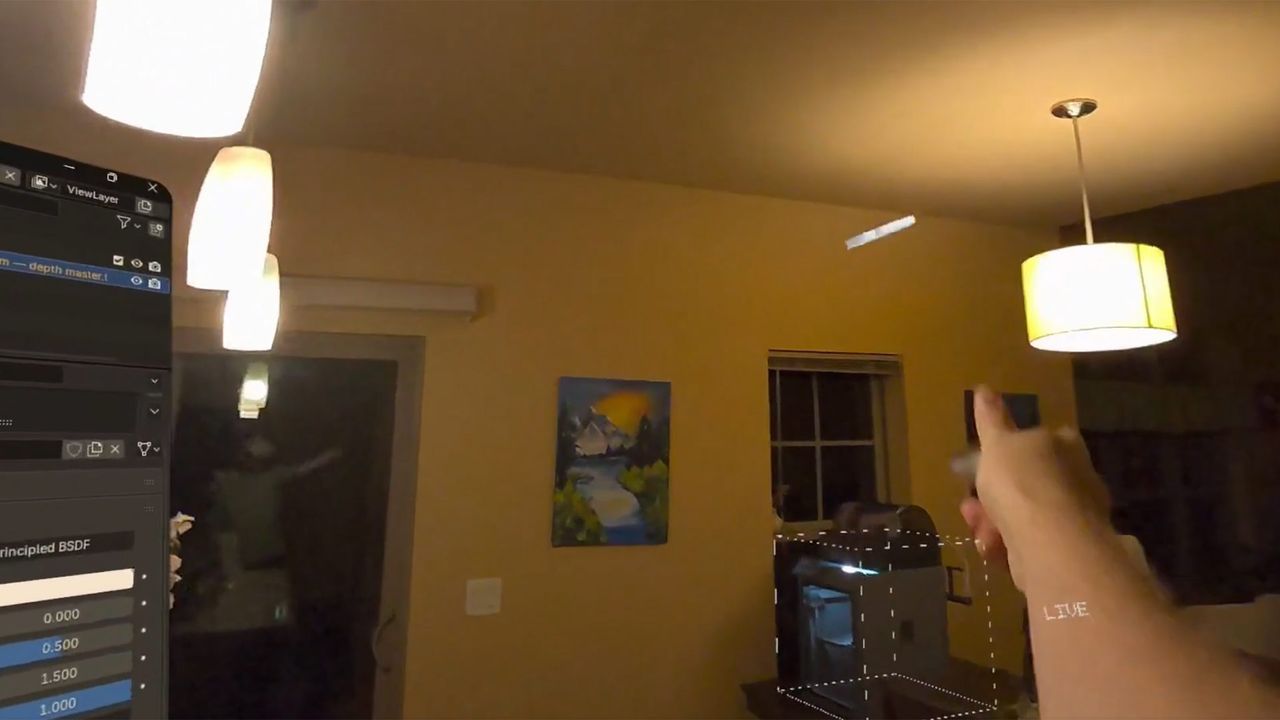
The demonstration itself was pure showmanship. In a viral video shared on social media, the enthusiast showcased an impressive synergy between his tools: a Meta Quest plus a high-end 3D printing system. The stunt involved modeling a three-dimensional object on his computer, picking it up, and literally throwing the digital design across the room to initiate printing on his machine. The reaction? A humorous claim that he felt more like Tony Stark, proving that the future of engineering is less about wires and more about imagination.
This isn’t just a gimmick; it’s a deeply integrated system. The hardware at the core of the operation includes a Bambu Lab P2S 3D printer equipped with an AMS 2 multi-material system, known for its speed and quality. The system was seamlessly integrated with a Meta Quest 3 headset, pairing two cutting-edge pieces of technology that typically don’t interact, into a single, unified creative platform.
How did the magic happen? The integration relied on clever coding and open access. The engineer revealed that the 3D printers feature an API that allows for local control. By setting up a quick web server on his PC, he successfully bridged the gap, creating a pipeline that connected the Android app, the PC, and the 3D printer.
The true genius, however, lay in leveraging advanced AI. The integration was finessed using the capabilities of the GPT-6 Astra model, essentially using “vibe coding” to manage the complex interaction between the VR environment and the physical machinery. This approach demonstrates how powerful generative AI can act as the connective tissue between disparate technologies.
Beyond the novelty of throwing models, the project points toward a future where AI-assisted design and physical prototyping become mainstream. The engineer is not just playing with gadgets; he is exploring how deep learning and immersive technology can accelerate the entire design-to-print cycle. This open-source ethos is further evidenced by his willingness to share the code, inviting the community to follow in his footsteps and experiment with similar integrations.
The potential impact is massive. Whether it’s accelerating complex design processes or unlocking new creative avenues in gaming—as seen in projects like the decompilation of classic titles—this blending of VR, AI, and additive manufacturing is ushering in a genuinely exciting era for makers and innovators.
Buy on Amazon
Credit