Record drone strike halts Russia’s largest gas producer with $55k plywood
The Sky’s the Limit: How Lightweight Drones Are Redefining Long-Range Warfare
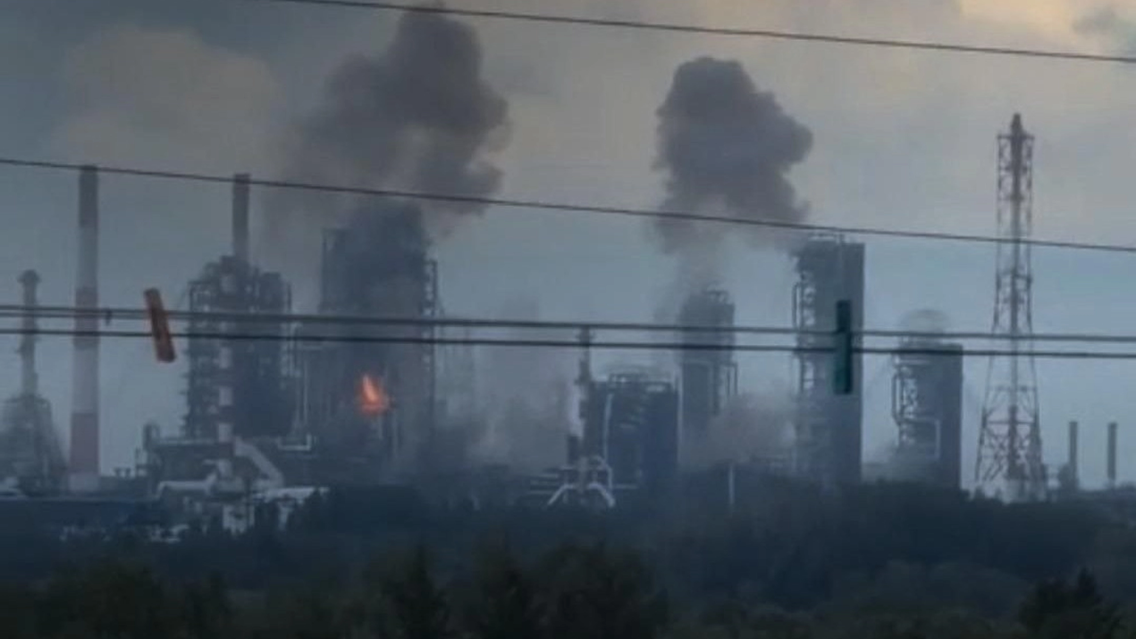
A relatively simple machine, built from plywood and foam, delivered a punch that rattled the foundations of Russia’s energy infrastructure. On July 6th, Ukrainian FP-1 drones executed one of the longest-range strikes in the war, flying roughly 2,500 kilometers over more than twelve hours to target the massive Gazprom Neft oil refinery in Omsk, Siberia.
This remote operation didn’t just cause disruption; it exposed a potent new method for asymmetric warfare. The result was severe damage to key processing units at the facility, including the CDU-10 crude distillation unit, which handles a significant portion of the plant’s capacity. Further damage occurred when network links vital to the adjacent CDU-11 unit were disabled, effectively crippling the refinery’s ability to operate and sell gasoline and diesel in the days that followed.
The success of this deep strike wasn’t just about distance; it was about ingenuity. The FP-1 drone is not a piece of cutting-edge military hardware built in a high-tech facility. Instead, it represents an approach focused on mass production and extreme range, constructed using lightweight materials like plywood for the airframe and foam wings skinned with fiberglass or carbon fiber. This design philosophy allowed the drones to achieve staggering reach despite their lightweight structure.
To make this long-distance travel possible, Ukrainian planners layered sophisticated navigation systems. The drone’s guidance relies on a purpose-built algorithm that layers inertial and satellite guidance to actively resist GPS spoofing, ensuring the strike remains accurate far behind enemy lines. One expert noted that planning such a route around sophisticated air defenses required more than a week of careful plotting.
The technology behind these strikes is scalable. Fire Point, the company responsible for developing the FP-1, produces approximately 100 units daily, and this platform now accounts for roughly 60% of Ukraine’s deep strikes inside Russia. This deployment demonstrates a shift in tactical focus: exploiting vulnerabilities rather than engaging in direct confrontation with expensive, high-altitude defenses.
The strategic advantage lies in the drone’s design. It deliberately exploits Russian air defense systems, which are optimized to detect fast jets and ballistic missiles, not slow, low-altitude aircraft with minimal radar signatures. While Moscow scrambled stealth fighters like the Su-57 against the Omsk raid, the drones successfully penetrated the outer layers of defense.
The impact on Russia’s industrial output is clear. The Omsk refinery became the sixth major facility forced to shut down since June, signaling that these long-range strikes pose a tangible threat to Russia’s economic stability. As Ukraine continues to push boundaries—with new drones capable of reaching 3,000 km and cruise missiles striking air defenses as they thin out—the future of warfare is increasingly being defined by ingenuity, range, and the ability to strike where it matters most.
Buy on Amazon
Credit