Red Faction Guerrilla Action Review 2018
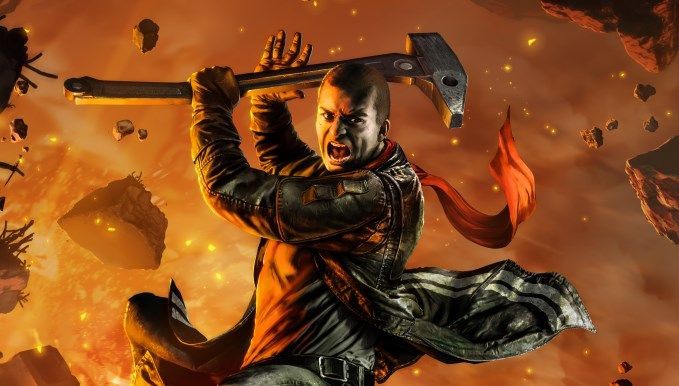
There are games that set the world on fire, and then there are games where you are allowed to smash the world apart. For many players, the latter experience is what truly sets a title apart. This unique blend of action and physics-based destruction is not just a gimmick; it’s a masterclass in environmental interaction that reshaped how we think about open-world design.
In the heart of this evolution lies the ability to shatter the environment itself. Imagine taking a simple hammer and turning it into an instrument of epic scale. You don’t just walk through a landscape; you become a force capable of demolishing structures, blowing open walls, and collapsing entire pillars. This visceral feedback—the satisfying crunch of concrete giving way—is what makes games like Guerrilla’s creations so immediately engaging.
While the overarching story or shooting mechanics might occasionally prove unremarkable, the sheer joy of manipulating the physical space is undeniable. Whether you are crashing a vehicle through an enemy base, detonating mines to cause a bridge collapse, or watching a tower melt and fall in slow motion, this form of interaction delivers a kinetic satisfaction that lingers long after the action stops. It turns exploration into demolition, making every corner of the map feel alive with potential chaos.
This destructive philosophy wasn’t born in isolation. While other titles experimented with environmental changes, it was Guerrilla that pioneered the idea of Geo-mod destruction in a large-scale open world setting. They demonstrated that breaking down the environment as a puzzle—using an arsenal to efficiently collapse structures—is more rewarding than simply traversing them.
Even today, this innovation stands alone. While other games have incorporated destructible elements, Guerrilla’s approach remains unmatched in making the physical environment an active, malleable component of gameplay. It established a standard for open-world design where manipulation of space is paramount.
More recently, updates have refined this experience. Free editions and reworkings now introduce stunning visual upgrades, including enhanced textures, superior lighting, better shadows, and native 4K support. These improvements don’t fundamentally change the core gameplay, but they add a beautiful, sharper polish to the already dynamic world.
For those interested in pure physics fun, modes like the Wrecking Crew challenge take this destruction mechanic to a new level. Players can ditch the narrative and focus entirely on maximizing destructive efficiency, setting parameters for speed and collapse, turning the chaos into a high-score battleground that appeals directly to the thrill-seeker.
The enduring legacy of this game is simple: it proved that an open world doesn’t need to be just a place to run; it can be a playground to break. It showed that manipulating matter and space with your tools creates depth, innovation, and an unforgettable sense of mastery over the digital landscape.
Buy on Amazon
Credit
