RTX 5500 delivers 2.6X VRAM boosting AI margins
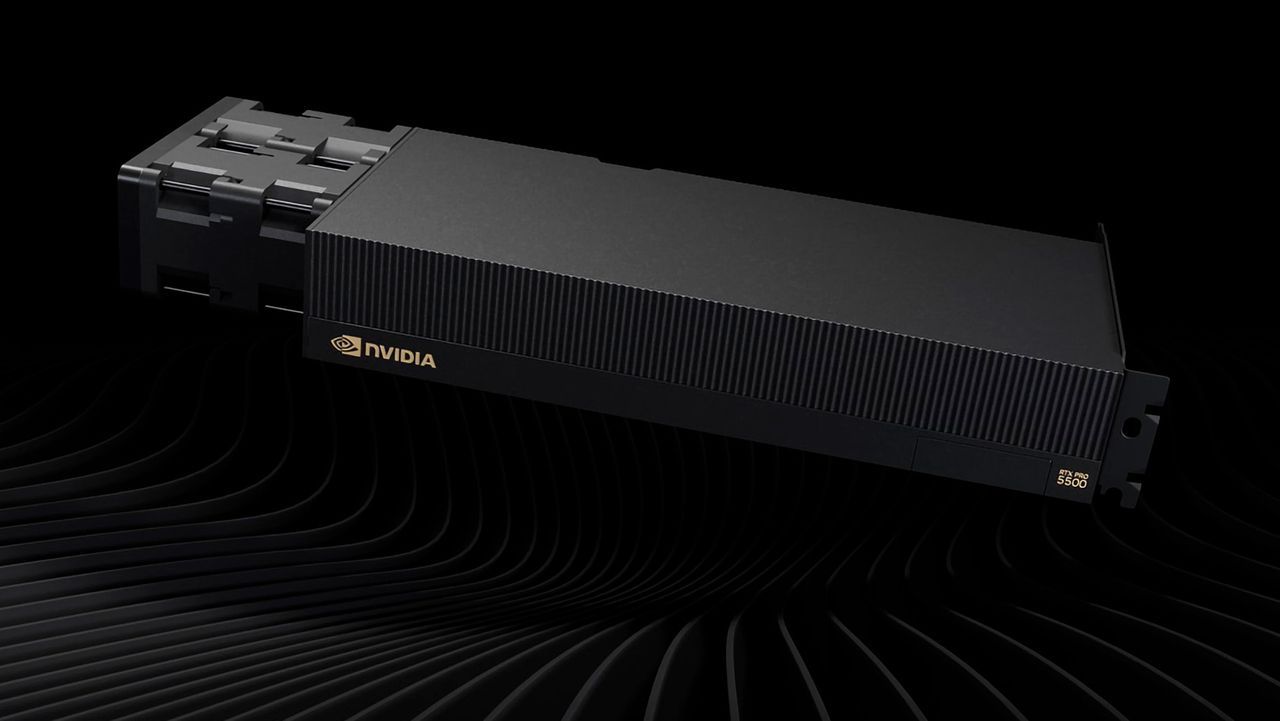
The Great Memory Leap: How NVIDIA Built the RTX Pro 5500 to Bridge the Gap
When we look at the bleeding edge of graphics technology, the GeForce RTX 5090 is rightfully celebrated as a powerhouse. But the real innovation isn’t just in raw processing speed; it’s in strategic design. NVIDIA has just dropped a fascinating new card, the RTX Pro 5500 Blackwell Workstation Edition, which isn’t just another graphics card—it’s a masterful piece of engineering designed to fit perfectly into the complex world of professional AI and high-end computing.
This new card manages to borrow the core DNA of the flagship, utilizing the same GB202 silicon die that powers the GeForce RTX 5090. This immediately places the RTX Pro 5500 in a highly competitive bracket, offering performance comparable to the RTX 5090, boasting 21,760 CUDA cores. It’s a clear signal that the performance gap between consumer and professional applications is rapidly shrinking.
But where the RTX Pro 5500 truly shines is not just its processing power, but its memory architecture. NVIDIA has packed this workstation card with a remarkable 84GB of GDDR7 memory—a capacity that positions it uniquely among high-end professional options. This memory configuration allows the RTX Pro 5500 to occupy the sweet spot, sitting comfortably between the 72GB memory of the RTX Pro 5000 and the 96GB found in the more expansive RTX Pro 6000 series.
This strategy is brilliant. It essentially creates a mid-market behemoth designed to serve demanding enterprise workloads without forcing users into the extreme pricing tiers of the flagship cards. It leverages the shared silicon foundation, which provides efficiency, while delivering a memory capacity that professionals desperately need for large-scale AI models and complex simulations.
The technical details reveal a nuanced approach to bandwidth. While the capacity is huge, the speed is carefully managed. The RTX Pro 5500 utilizes 28 GDDR7 memory chips operating at 25 Gb/s, delivering a bandwidth of 1,400 GB/s. This pace allows the card to share the same memory subsystem as the RTX Pro 6000D, demonstrating a high level of integration and efficiency.
It turns out that simply having massive amounts of memory isn’t enough; the speed of access matters just as much. By maintaining high-speed interconnects, NVIDIA ensures that this 84GB configuration is not just large, but also highly responsive, making it a true workstation powerhouse.
Ultimately, the RTX Pro 5500 is less a revolutionary leap and more a perfectly executed strategic bridge. It smartly capitalizes on the shared hardware ecosystem and memory innovation to deliver performance and capacity that were previously only available at the very top end of the market, making high-end, flexible AI and rendering possible for a wider range of professionals.
Buy on Amazon
Credit