RTX Spark laptops and Gamescom 2026 gaming haul
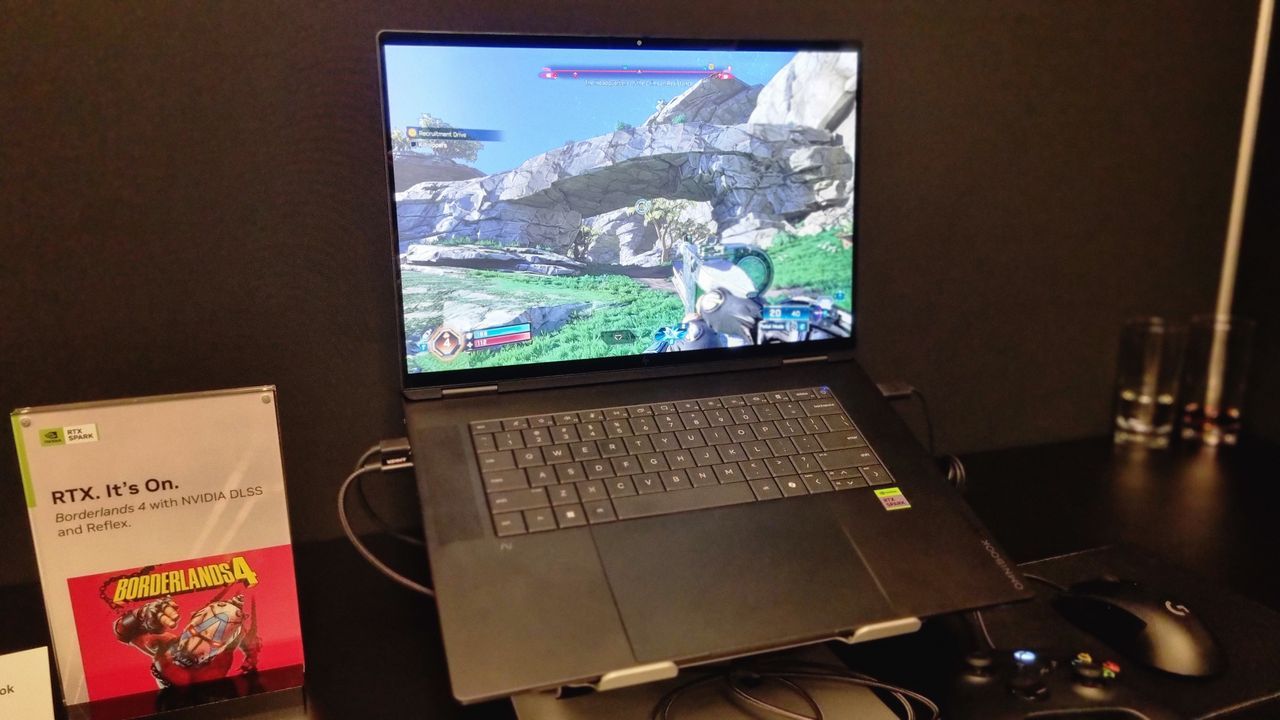
Hello from Gamescom 2026, where the focus has been squarely on the latest hardware from Nvidia, and the results are shaping up to be quite the spectacle. The core of the showcase revolved around Nvidia’s RTX Spark SOC. This custom chip package features 20 Grace CPU cores alongside 6144 RTX Blackwell GPU cores.
What this means for gamers is a serious leap forward. On paper, the performance metrics suggested by the RTX Spark SOC are comparable to the power of an RTX 5070, capable of running demanding games at high frame rates, especially when utilizing frame generation technology. This smooth performance was underpinned by the seamless operation of Microsoft’s Prism translation layer, ensuring a smooth and worry-free experience across Windows-on-Arm and Nvidia chips. Apparently, the emulation landscape is running perfectly, with no reported unforeseen issues.
Beyond the theoretical power, the real test came when the machines were put to work. A few titles, including 007 First Light, Arc Raiders, Borderlands 4, and F1 25 all ran without a hitch, confirming the impressive real-world capability of the new architecture.
The laptops on display offered some serious design flair. The Asus ProArt P14 stole the show. With its milled aluminum chassis, crisp keyboard, and vivid OLED panel, it immediately felt like a premium gaming machine. It was sleek, portable, and provided gaming performance that felt comfortably in the 100 fps+ range, even in titles like Arc Raiders. Its 14-inch size proved perfect for travel, easily fitting into a backpack without sacrificing power.
Equally impressive was the Dell XPS 16 Creator Edition. While I associate Dell with being understated, this model demonstrated excellent execution. It offered a tight keyboard, a beautiful OLED display, and quiet performance while handling graphically intensive titles like Doom: The Dark Ages. Both machines successfully packed serious gaming capability into slim, portable designs, blending high performance with professional aesthetics.
However, not every competitor looked as promising. The Microsoft Surface Laptop Ultra, despite its internal hardware, felt somewhat dated in its design. While it handled games like World of Tanks, the chassis felt less dynamic, and the Mini LED screen wasn’t as enticing as the competition. It appeared to be playing catch-up, burdened by a feeling of being “old fashioned” compared to the innovative machines surrounding it.
Ultimately, the conversation shifted from hardware prowess to economics. When you look at the potential of these Spark-infused machines, especially when configurations included massive amounts of RAM, like 128 GB, the resulting pricing is understandably astronomical. The Nvidia representatives were notably tight-lipped on exact figures, but the reality is that these are going to command premium prices.
This leads to a sentiment among enthusiasts hoping for a more balanced future. There is a desire for more options—slim, light, gaming-capable laptops with reasonable memory configurations—that don’t require a completely ludicrous budget. While the current market price for these top-tier machines is certainly high, the hope remains that future releases will offer a wider spectrum of accessible performance without requiring an impossible financial commitment.
Buy on Amazon
Credit
