Saildrone Surveyor launches missiles from drone sailboat
Sailpowering the Future: How Drones Are Redefining Naval Warfare
The line between civilian innovation and military might is rapidly blurring, and the U.S. Navy is leading the charge in redefining what a naval asset can be. During the recent Rim of the Pacific (RIMPAC) 2026 exercises, this fusion came to a spectacular demonstration: a sail-powered drone successfully executed a live-fire mission, proving that autonomous, remote technology is now a critical component of combat strategy.
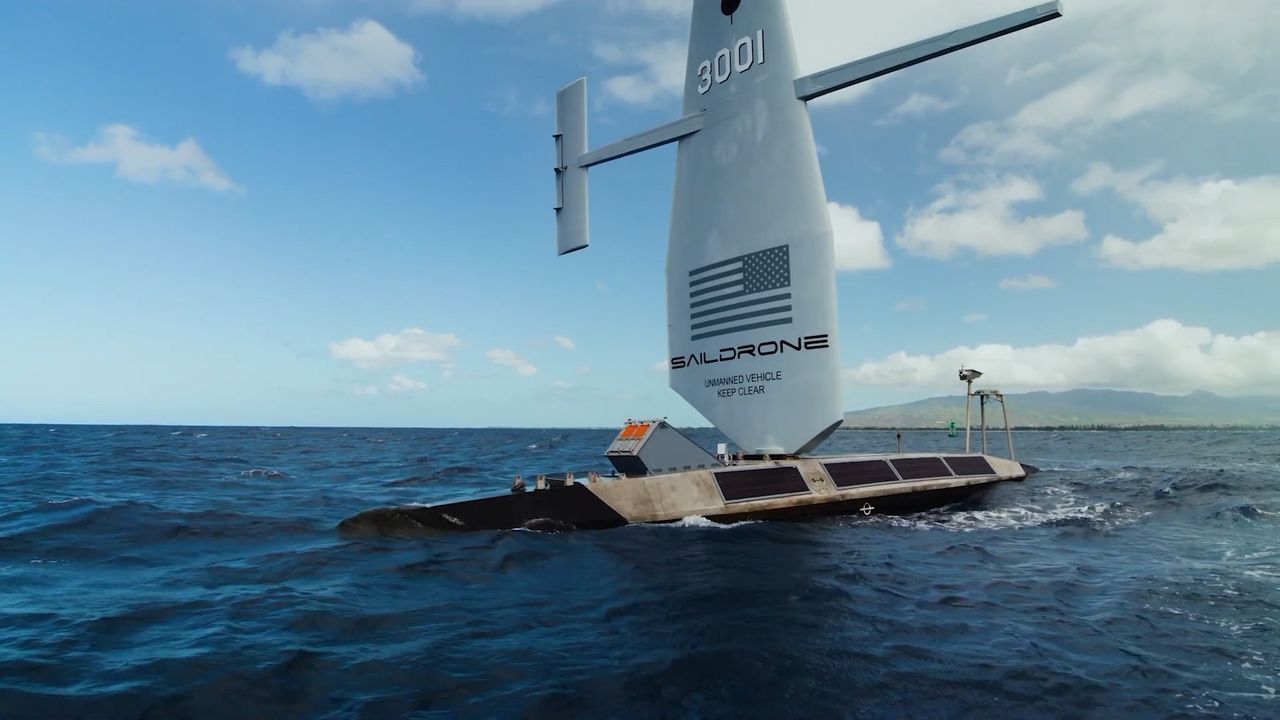
At the heart of this achievement was the Saildrone Surveyor SD-3001 Unmanned Surface Vessel (USV), a platform co-developed with Lockheed Martin designed to carry lethal combat technology. This advanced vessel, harnessing the power of wind to glide across the ocean, proved its operational capability by coordinating seamlessly with the USS Theodore Roosevelt (CVN-71) Carrier Strike Group.
The demonstration went beyond simple flight; the USV proved its potential as a sophisticated combat system. Under the control of ARES, the drone successfully launched two combat-proven Joint-Air-to-Ground Missiles (JAGM). These missiles utilize a dual guidance system—combining a semi-active laser and millimeter-wave radar. This powerful combination allows the weapons to achieve effectiveness even in challenging, low-visibility maritime environments.
Adding another layer of complexity, the Saildrone also showcased its advanced electronic warfare (EW) capabilities. The drone coordinated its sensors with an MH-60S helicopter, enabling the successful detection, classification, and identification of surrogate threats. This ability to passively monitor and classify threats paints a picture of future warfare where intelligence gathering is decentralized and instantaneous.
The development of this integrated system was a testament to rapid, effective collaboration. Work began as early as October 2025, with partners aiming to merge the autonomous nature of Saildrone USVs with Lockheed Martin’s combat-proven effectors. Achieving this integration, including ensuring the USV worked smoothly within the Navy’s Adjunct Remote Engagement System (ARES), within just six months and culminating in a successful live-fire test, was a significant technical feat.
This successful demonstration has significantly de-risked larger future integrations. The focus is now shifting toward expanding the capabilities of the fleet. Further work alongside Lockheed Martin is targeting larger payloads, with plans for the Saildrone Spectre. This next generation of USV is expected to carry significantly larger containerized capabilities, including the powerful Lockheed Martin Mk 70 launcher and SURTASS Towed Array, promising an even greater reach and impact for naval operations.
With the SD-3001 proving its mettle in combat scenarios and passive surveillance, the future of maritime warfare looks incredibly dynamic. This technology is not just about faster drones; it is about leveraging intelligent, autonomous systems to gain an undeniable edge in the global arena.
Buy on Amazon
Credit