Samsung 990 2TB SSD Review: Familiar Speeds
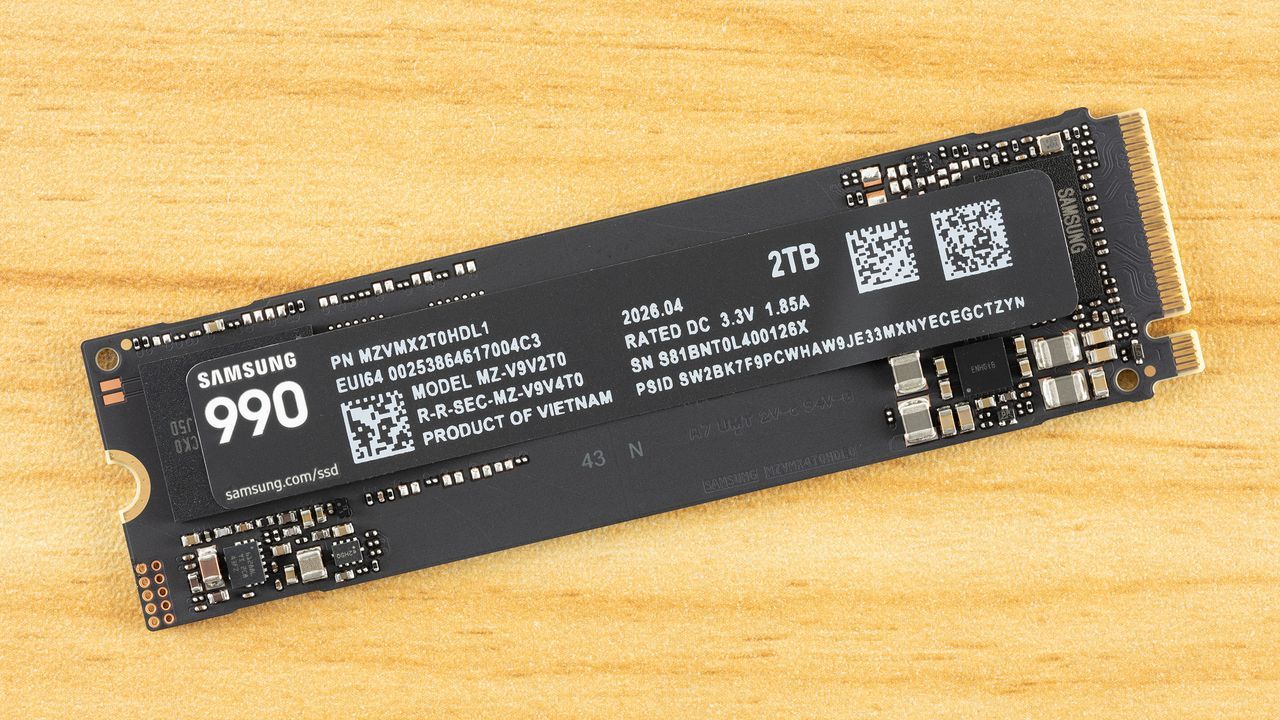
This text provides an in-depth analysis of the Samsung 990 SSD, focusing heavily on its caching technology, performance characteristics, power efficiency, and positioning within the current market landscape, particularly concerning QLC flash.
Here is a structured breakdown of the key points:
—
1. Write Cache and Performance Mechanics
Measurement Methodology: The authors use Iometer to stress-test the SSD with sequential writes for 15 minutes to measure the size of the write cache and performance once the cache is saturated, monitoring recovery during idle rounds.
TurboWrite 2.0 Caching: Samsung utilizes a hybrid caching system combining a fixed, static portion of pSLC (per-stream SLC) with a much larger dynamic portion. This design aims to provide fast performance across various workloads by ensuring both random writes and sequential operations have adequate cache space.
Cache Management: When the cache is exhausted, the drive must either write directly to native QLC flash or “fold” data over from pSLC to QLC. Folding is slower but can reduce wear by using predictable sequential writes, minimizing errors during transmission.
Speed Advancement: The 990 benefits from newer flash and firmware, allowing it to achieve faster write speeds (e.g., moving from 1600 MT/s to 2400 MT/s).
2. Flash Technology Context (QLC vs. TLC)
QLC Reality: The analysis situates the drive within QLC flash technology, which involves a higher bit density (4 bits to 1 ratio) compared to TLC (3 bits to 1 ratio).
Cache Scaling Trend: The text notes the general trend in consumer SSDs is for manufacturers to increase both static and dynamic caches as capacity increases, aiming to better hide potential performance weaknesses associated with QLC/DRAM-less designs.
Relative Performance: While the drive’s absolute performance might be lower than a TLC-based drive (like the 9100 Pro), Samsung markets the 990 as having over 50% faster write performance than the 990 EVO, which is attributed to the advancement in flash technology and firmware.
3. Power Consumption and Thermal Performance
Efficiency Focus: The review emphasizes performance-per-watt (efficiency) over raw power consumption.
Comparison to Competitors: Although Samsung markets a 38% efficiency gain over the 990 EVO, the author notes that QLC flash inherently makes it harder for this drive to outperform TLC-based drives in terms of pure power efficiency behind the scenes.
Thermal Concerns: While the testing environment was controlled, the drive generates heat. The author suggests the 990 is not ideal for high-end desktop or PS5 use, and would benefit from better heatsinking, though it is deemed “perfectly fine” for typical workloads in a laptop context.
4. Overall Conclusion and Positioning
The author concludes that the Samsung 990 is not expected to be overwhelmingly fast, but its positioning is valid given the current technological direction:
A Good Alternative: The 990 serves as a good, reliable alternative in the market, especially for budget builds or OEM use where QLC flash is accepted.
Enterprise Focus: The design choices seem more geared toward enterprise reliability (evidenced by reduced warranties and robust endurance measures) than raw consumer peak performance.
Market Niche: It occupies a niche—a reliable drive that offers Gen 4 performance for a reasonable price, bridging the gap between high-end DRAM drives and more budget options.
In summary, the review positions the Samsung 990 as a competent, well-engineered, albeit not peak-performance-focused, QLC SSD that balances speed, endurance, and efficiency, making it a solid choice for most users outside of extreme enthusiast benchmarks.
Buy on Amazon
Credit