Scaling AI compute at home with dual Nvidia Grace Blackwells
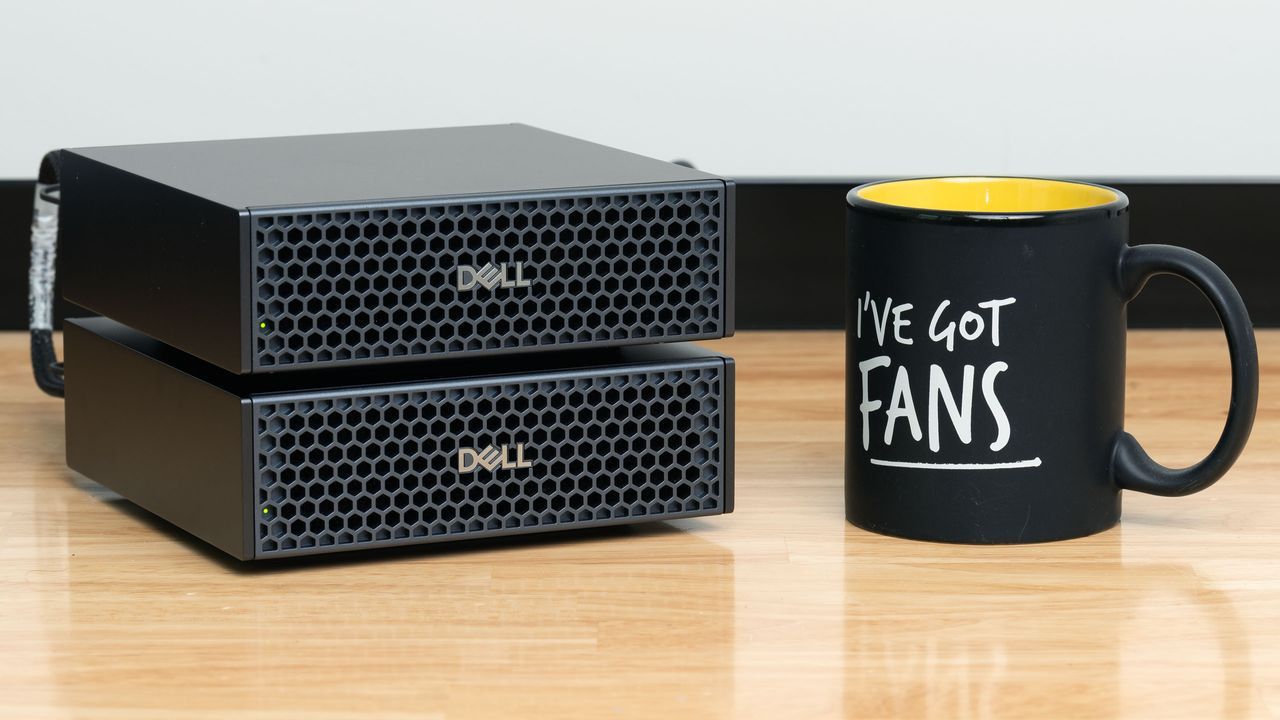
Scaling the Sandbox: How Local AI Clusters Are Redefining the Home Lab
The quest for larger local memory pools in the world of artificial intelligence has long been a bottleneck. To truly experiment with the most ambitious Large Language Models (LLMs), enthusiasts need VRAM far exceeding what standard consumer hardware can offer. The solution? Building powerful, distributed AI clusters right in the home lab.
Recently, local AI testing has focused on leveraging cutting-edge large language models that can fit within the memory of next-generation systems. This involves tackling the challenge of displacement—how to scale up computation when physical memory is limited. Today, we explore what’s possible using a cluster built from Nvidia GB10 systems, specifically pairing them with high-performance host machines like the Dell’s Pro Max with GB10, which provides a generous 256GB of RAM for an AI sandbox.
While model quantization can help squeeze smaller models into limited space, some advanced open models remain too massive even when quantized. The trick then becomes distributing these massive models across multiple local systems using the network as a powerful scale-out backbone, mirroring the architecture used in major data centers.
Achieving large memory pools requires serious hardware. Scaling up VRAM from 128GB demands expensive host systems with ample PCI Express bandwidth. Traditional GPU server setups, utilizing multiple high-end cards like the RTX Pro series, often come with prohibitive costs and significant platform challenges. For many enthusiasts, the dream of a local AI cluster clashes with reality: building a powerful system quickly can cost upwards of $20,000 or more.
This is where newer architectures step in. Nvidia’s DGX Spark systems introduced scalable, cluster-able designs featuring built-in ConnectX 7 network interfaces that support Remote Direct Memory Access over Converged Ethernet (RoCE). These high-end links enable multiple GB10 boxes to communicate seamlessly, creating a distributed AI computing cluster.
Instead of chasing the complexity and cost of massive GPU server builds, this approach provides an alternative. A pair of Dell Pro Max with GB10 systems, complete with necessary cabling, can be assembled into a turn-key cluster with 256GB of RAM for under $6,332. This package delivers substantial memory capacity at a fraction of the cost associated with scaling traditional GPU server setups.
The real magic happens when setting up the network. Connecting these systems isn’t plug-and-play; it requires careful configuration to harness the full potential of the 200Gbps links. It turns out that while initial attempts hit networking hurdles—often stemming from firmware version mismatches—persistence and focused troubleshooting lead to success. By meticulously managing the updates and configuring the specialized tools, enthusiasts successfully unlocked the full RDMA bandwidth, proving that this cluster approach is viable.
With a stable backbone in place, the focus shifts to the models themselves. Running powerful Mixture-of-Experts (MoE) models like DeepSeek v4 Flash and MiniMax 2.7 across the cluster demonstrates that even with distributed processing, these systems can still produce impressive token throughput. While performance isn’t always instantaneous, the result is a highly functional local AI sandbox capable of handling demanding tasks.
Ultimately, clustering Nvidia GB10 systems offers a straightforward, space-efficient, and relatively cost-effective way to scale your local AI experimentation beyond 128GB of VRAM. It provides enthusiasts with the necessary tools to build a truly powerful local AI sandbox without needing an enterprise budget or a dedicated server closet.
Buy on Amazon
Credit