Self-driving truck kills drones with shotgun turret US Army test
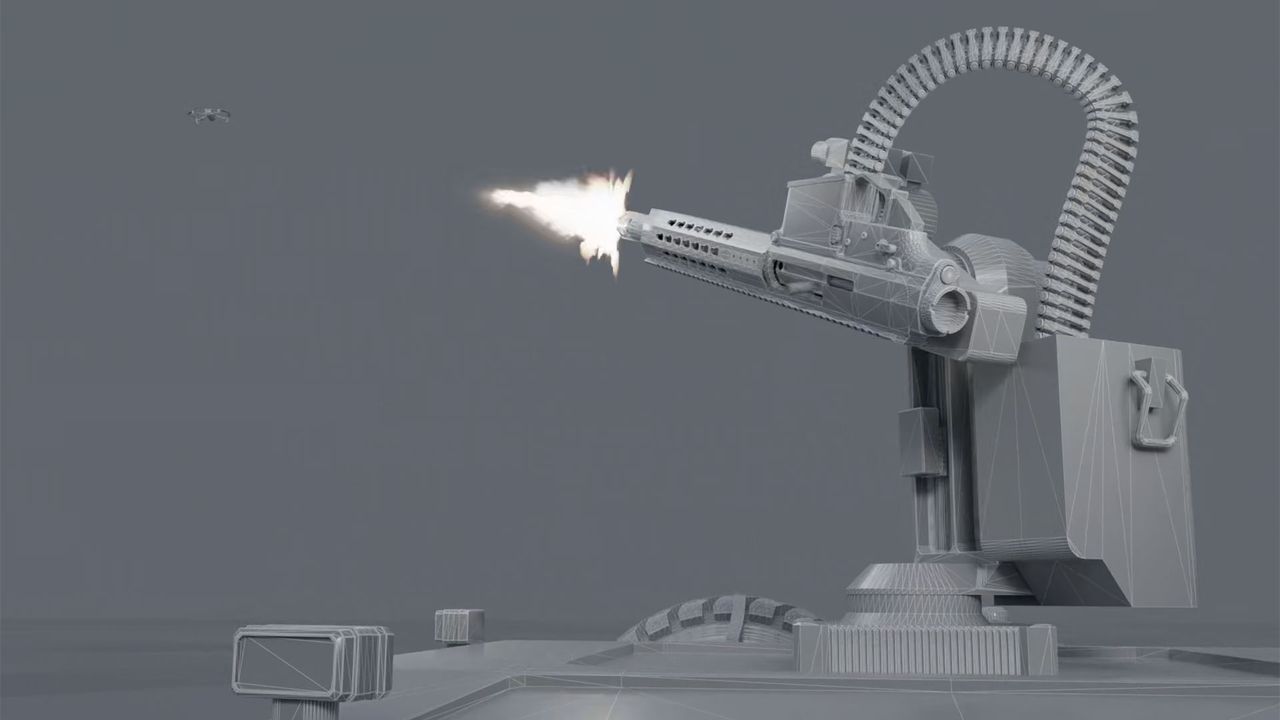
The battlefield is evolving at warp speed, and the next generation of military hardware is proving that autonomy and advanced defense technology can work hand-in-hand. The U.S. Army recently put this principle into practice, testing an autonomous breaching vehicle equipped with an onboard counter-Unmanned Aircraft System (C-UAS) turret during live-fire exercises at Fort Bragg.
This cutting-edge testing was part of Project Sandhills 2.0, an initiative focused on pushing the boundaries of autonomous vehicle technology. The focus was on developing systems that can move independently while simultaneously ensuring their safety and operational effectiveness against modern threats.
At the heart of the experiment were self-driving Ford F-250 trucks, powered by Forterra’s AutoDrive system. The selection of the F-250 was strategic, recognizing that Ford’s readily available parts would streamline maintenance and repair, making the autonomous system a practical and viable asset for the military.
But the innovation didn’t stop with self-driving capability. To protect these autonomous systems from increasingly common threats posed by Forward-Looking Photo (FPV) drones, the trucks were outfitted with computer-controlled drone-killing shotguns. This integration transforms a heavy transport vehicle into a mobile defensive platform.
The core challenge addressed by this new iteration of the Sandhills project was how to secure breaching operations. Breaching missions are inherently risky, and they can be seriously compromised by determined enemies using sophisticated drone technology to scout and disrupt advancing forces. The integration of C-UAS abilities is designed to clear the path for human soldiers to advance safely.
The defense solution, developed by the Austin-based 9 Mothers, is centered around the Edda counter-unmanned aircraft system turret. This robust system is designed to intercept fast-moving drone threats, specifically those measuring seven inches in diameter or larger, operating effectively at ranges between 10 to 100 meters.
What makes the Edda system particularly clever is its detection methodology. Rather than relying solely on visual tracking, the turret first detects incoming drones acoustically before locking on with its onboard visual system. This stealth approach helps prevent the entire system from being easily detected by advanced enemy drone sensors.
The mechanism itself is a feat of precision engineering. The shotgun-armed Edda turret is an ultra-fast, ultra-light, ultra-accurate motion platform, capable of making adjustments at 5 degrees in under 15 milliseconds with 1.5 arcminute precision.
While the performance metrics are impressive, the full scope of the system’s effectiveness remains a subject for further study. The military community is now focused on gathering more data—specifically the kill rate, maximum engagement speeds, and the total capacity of the system—to fully understand how this integrated solution will redefine the landscape of future military operations.
Buy on Amazon
Credit