Single-slot RTX 3060: Crippled performance and scary temps
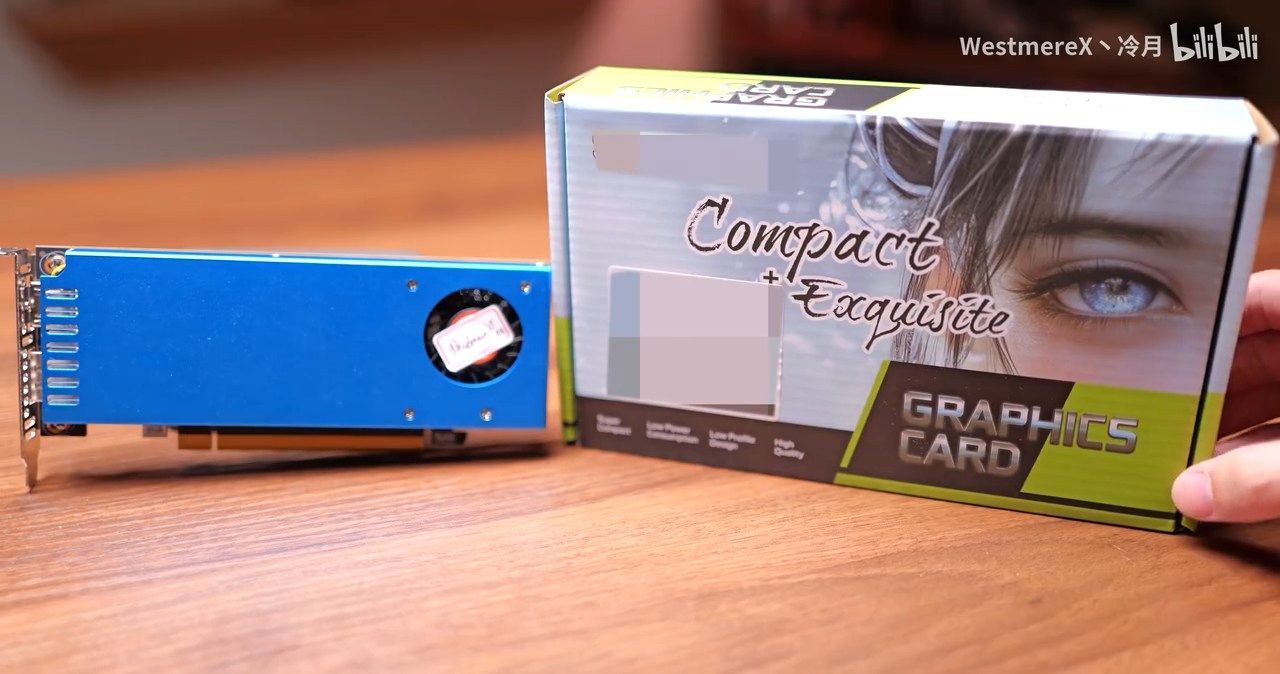
When the GeForce RTX 3060 launched in 2021, it arrived as a mainstream gaming powerhouse, offering great performance at a reasonable power consumption of 170W. But as the component crisis unfolded, the focus shifted from raw power to efficiency, prompting some creative engineering solutions. One such approach led to a fascinating, albeit flawed, experiment: a dramatically stripped-down version of the GPU designed to conserve energy.
In a move that puzzled many, engineers in China devised a 75W variant of the 3060. This version was conceived as a radical departure from standard design, eliminating the need for external power connectors entirely. Instead, it was designed to run solely off the PCIe slot it connected to, effectively making it cableless. The goal was to offer a super-efficient, compact alternative for power-conscious systems.
While the concept of a low-power card is appealing, the execution revealed significant design compromises. This specialized GPU adopted a single-slot, low-profile architecture, featuring a unique blower-style cooler roughly the size of a modern smartphone. It offered minimal connectivity, sporting only one HDMI and one DisplayPort, and notably lacked the fin stack and backplate typically found on high-end cards.
A closer examination of the hardware revealed further trade-offs. Teardowns showed that the internal structure was optimized for space over thermal performance. Memory chips were disconcertingly mounted without thermal pads or paste, relying instead on the thin metal shroud to directly contact the core for cooling. Furthermore, the airflow setup was rudimentary; a single fan existed only to expel heat, lacking any intake or proper positive airflow, suggesting the system struggled to manage heat effectively.
This structural approach, while compact, ultimately proved to be a bottleneck. When put to the test in standard benchmarks, the performance disparity became stark. The 75W model struggled to achieve boost clocks, barely reaching 900 MHz despite being rated for much higher speeds. In a benchmark run like Time Spy, the card scored only 4,821 points, falling far short of the typical 9,000+ score achieved by a standard RTX 3060.
The thermal struggles were equally obvious. During performance testing, the GPU hotspot surged past 90 degrees Celsius, confirming that the limited cooling apparatus was severely struggling to contain the heat. This resulted in significant thermal throttling, meaning the card was operating far below its potential. While one could argue that this compact design makes sense in low-power systems, the performance reality highlights the difficulty of squeezing high-level processing into such constrained thermal envelopes.
Ultimately, the story of the low-power 3060 variant is a classic example of the tension between form and function in hardware design. While the innovation in creating a cableless, low-profile card is noteworthy, the resulting thermal and performance limitations suggest that even the most clever engineering adjustments must always contend with the fundamental physics of heat dissipation.
Buy on Amazon
Credit