Soldering power cables directly to RTX 5090 for 600W power
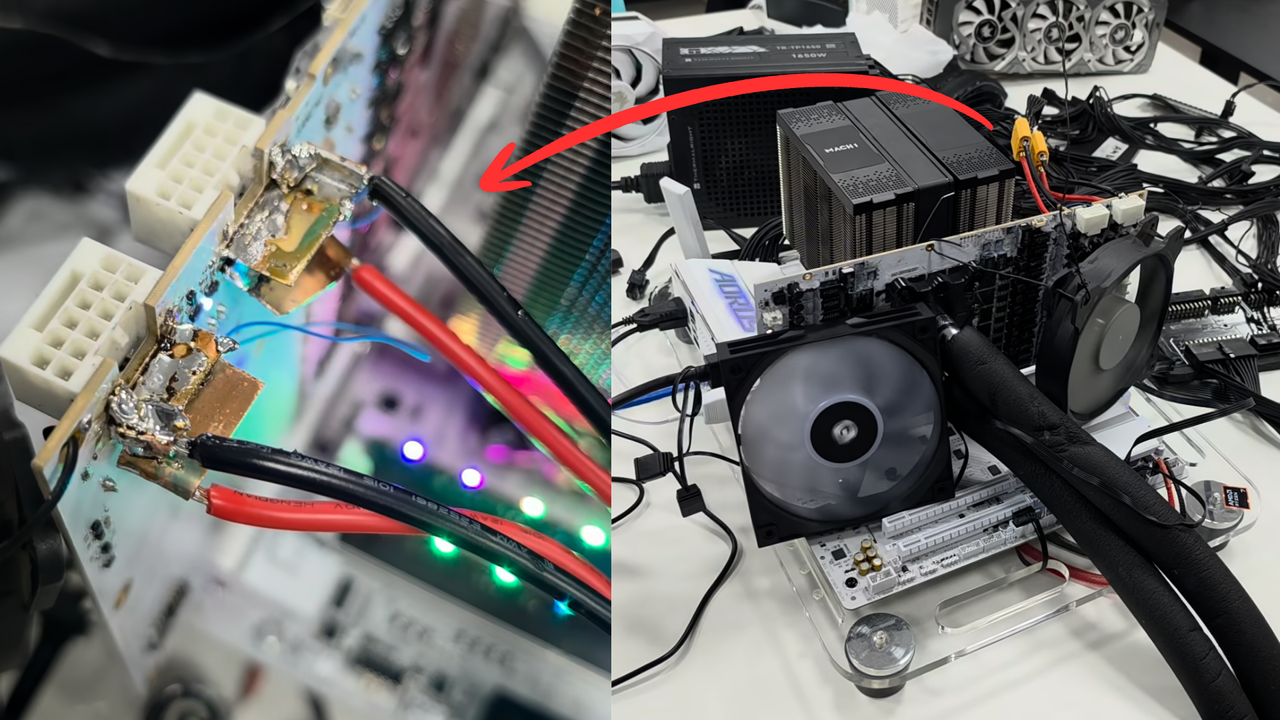
The high-end GPU world is often defined by a constant, nagging fear: that your expensive graphics card is destined to melt. Since the launch of powerful cards like the Nvidia GeForce RTX 5090, community forums have been flooded with stories of thermal issues and component failure. But what if the real culprit isn’t the chip itself, but the notoriously unreliable 16-pin power connectors designed to feed this incredible power?
One group of creators decided to stop whining and take matters into their own hands. Brazilian YouTuber TecLab recently conducted an extreme experiment, stripping down a high-end card to test the integrity of the standard power delivery system. Their goal was simple: eliminate the alleged weakness of the 16-pin connectors entirely.
For this test, they utilized a robust RTX 5090D variant, a model built to handle massive power demands, capable of supporting up to 2,000W OC BIOSes. To amplify the test, the modders removed the standard heatsink and fans, opting instead for a bespoke cooling solution: direct liquid cooling across the core.
The real innovation, however, lay in the power delivery bypass. Instead of relying on the official power cables, the team created two custom sets of wires, soldering them directly onto the PCB traces above where the 16-pin connectors normally sit. They achieved this by using adapters to intercept standard power cables and convert them into bare wires ready for soldering.
The results were compelling. Despite the unconventional setup, the card booted successfully and performed well in benchmarking. Crucially, the experiment demonstrated that running the GPU on custom-wired power was achievable, even when managing the heat through industrial liquid cooling. Power meter readings confirmed the card was operating safely, running at around 600W on the 12V rail.
This radical approach immediately raised a question about the factory-developed solution. If custom wiring proves functional, why hasn’t the industry adopted this method? It suggests that the 16-pin connector itself, or the way power is routed, might be the source of the recurring melting complaints.
While the experiment was a successful demonstration of a bypass, the takeaway isn’t just about custom soldering; it’s a critique of industry standards. It brings into focus the need for better safeguards. Today, tools like WireView are emerging, offering real-time power monitoring and temperature sensing directly on the GPU, promising to prevent future meltdowns and give consumers the peace of mind they deserve when investing in cutting-edge hardware.
Buy on Amazon
Credit