SSDs cost 18x more than HDDs as supply runs out by 2027
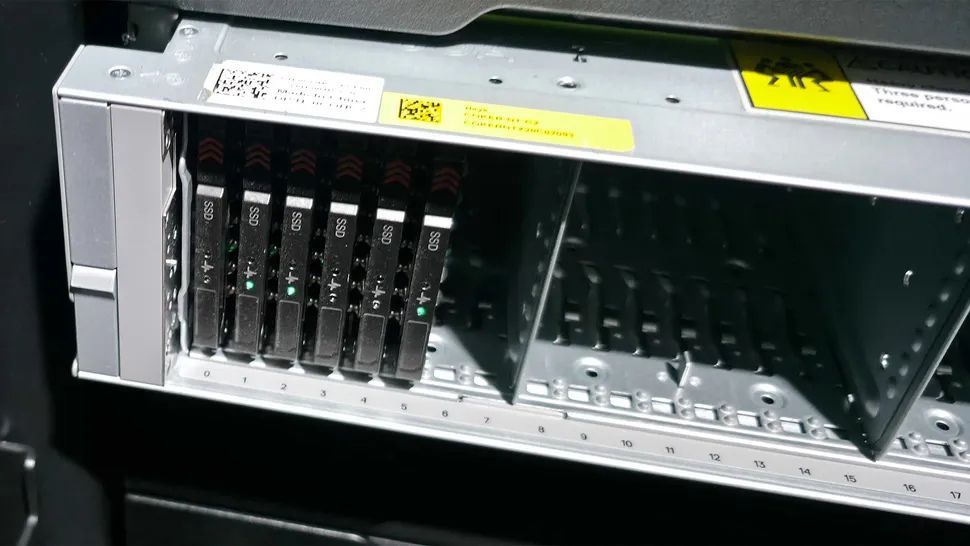
The AI revolution is hungry for data, and the infrastructure powering it is undergoing a dramatic, and rather expensive, transformation. What we are seeing isn’t just a market shift; it’s a fundamental revaluation of storage components, where the cost of the flash memory is soaring far ahead of the mechanical disks that hold it.
Consider the enterprise storage market. A single 30TB TLC enterprise solid-state drive (SSD) now commands a price of $22,600. This figure represents a staggering 6.5 times the cost it held just a year ago. When you compare this flash memory to traditional hard drives, the disparity is even more pronounced. An equivalent hard drive now costs $1,216. This puts flash memory at an astonishing 18.6 times the price of disk per terabyte, signaling a seismic shift in how data is valued in the age of artificial intelligence.
This volatility is playing out in massive deployments. A typical 25PB AI storage build, when configured with all-flash SSDs, costs $51.60 million. However, if a hybrid approach is considered—pairing SSDs with traditional hard drives—the cost drops significantly to $12.86 million. This difference underscores the complex economics of building future-proof infrastructure, where the choice between speed and capacity has profound financial consequences.
The pressure is not limited to the components themselves; the supply chain is equally stressed. The availability of traditional hard drives is hitting a bottleneck, with major manufacturers like Seagate and Western Digital reporting that nearline HDD output is sold out through 2027. This reality means that without long-term supply contracts, organizations are forced to pay volatile spot prices for the disks, adding further cost uncertainty to the equation.
Industry observers are noting that the flash price increases are structural, not temporary. While some indices show quarterly rises in NAND contract prices, market leaders argue that the elevated pricing reflects deeper structural changes in the market dynamics. This trend is evident across the board, with pricing indices demonstrating significant year-over-year growth as the market adjusts to the intense demand for high-speed, high-density memory.
The complexity of the market is further highlighted by specific vendor offerings. One notable configuration pairs 5.78PB of flash with 22.68PB of hard drives, equating to roughly 756 30TB units at index pricing. This mixed-fleet architecture allows for flexibility, but it also forces businesses to navigate an increasingly expensive landscape where the cost of storing data is rapidly becoming the defining factor for future innovation.
Buy on Amazon
Credit