Startup tests 3D-printed cryogenic rocket engine prototype
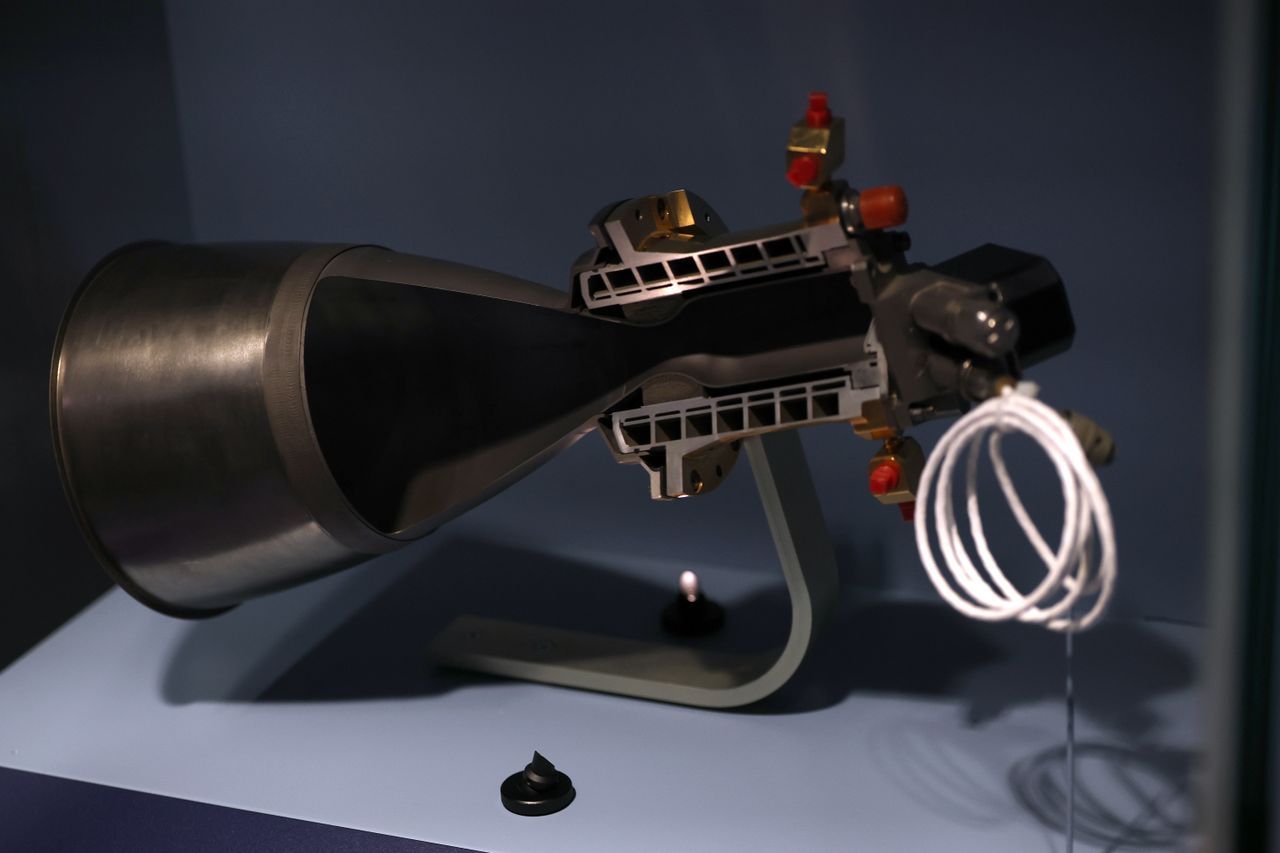
The future of rocketry is no longer confined to massive, slow-moving industrial complexes; it’s being forged in the digital realm. Indian startup Othisis is proving that the cutting edge of aerospace technology can be built layer by layer, using the magic of 3D printing to create performance-grade components that redefine what’s possible in space travel.
At the heart of this revolution lies Selective Laser Melting (SLM) technology. This advanced manufacturing process allows engineers to deposit microscopic metal powder onto a base, melting it with a precise laser to create solid structures. The process repeats, building layers that are only fractions of a millimeter thick—achieving incredible precision that traditional methods simply cannot match. This ability to handle complex metal alloys opens up an entirely new dimension for high-performance engineering.
Othisis has taken this precision to the stratosphere by successfully hot-firing its fully cryogenic rocket engine, a significant milestone achieved after a few determined attempts. This achievement highlights the potential of additive manufacturing in aerospace.
The newly developed engine is a 5 kN fully cryogenic design, powered by the potent combination of liquid oxygen (LOX) and methane propellants. What makes this design particularly ambitious is its focus on reusability. Othisis is targeting a VTVL (Vertical Take-Off, Vertical Landing) configuration, meaning the engine is designed to be reusable, drastically cutting down on operational costs.
The innovation extends beyond the printing process itself. The design leverages a chilled-fuel loop for cooling, and the team has explored the theoretical possibility of manufacturing the necessary propellants, liquid oxygen and methane, in-situ directly from readily available materials like carbon dioxide and water. This represents a paradigm shift in how propulsion systems can be conceived and created.
Performance matters, and the Othisis engine delivers. It boasts a burn stronger than commonly used Kerolox, while its design minimizes residue, promising faster turnaround times and enhanced reusability for future missions.
While pioneering this technology, the team is already moving toward practical applications. Othisis has reportedly signed Memorandums of Understanding (MoUs) to carry payloads into space, demonstrating that their ground-breaking engine is poised for real-world deployment. Founded by Syed Affan, the company is the brainchild of an individual who built a vibrant community around rocket science.
The journey from a digital design to a functional, reusable cryogenic engine is a testament to how material science and advanced manufacturing converge, pushing the boundaries of what is achievable in the quest for space exploration.
Buy on Amazon
Credit