Steins;Gate’s next FPS is pure slop
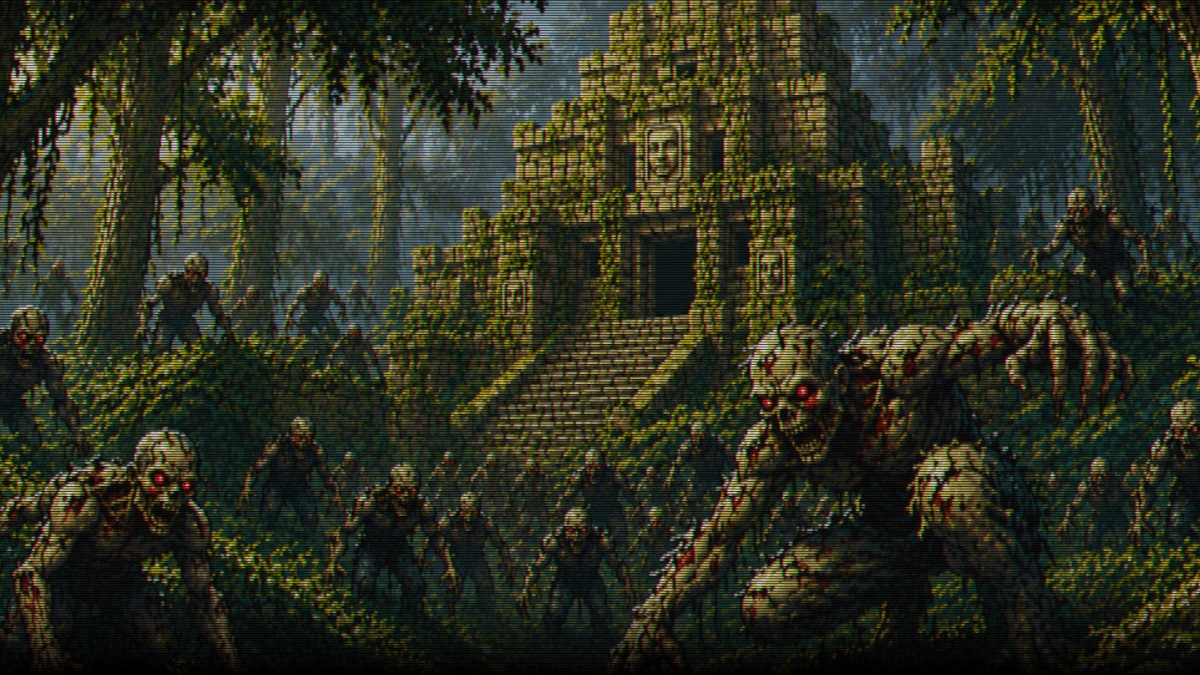
When Juggernaut dropped, it arrived with the undeniable, chunky aesthetic of classic boomer shooters, evoking the nostalgic spirit of the Wolfenstein engine. But beneath the pixelated surface of huge zombie waves, something far more interesting—and far more complex—was brewing. This free-to-play experience, while visually unassuming, became a fascinating case study in the evolving relationship between game development and generative artificial intelligence.
The game is the brainchild of Mages Inc, a Japanese studio celebrated for crafting beloved visual novels like the Steins;Gate series and the Corpse Party franchise. Mages Inc has a long and storied history in the gaming world, spanning over two decades, though their ventures into the first-person shooter genre present a curious evolution for a team primarily known for visual novel development.
The true surprise, however, lies not in the game’s retro style, but in its technical foundation. Mages Inc chose to offer an unprecedented level of transparency regarding the game’s creation process, revealing a striking breakdown of how the game was assembled. This AI disclosure essentially turns Juggernaut Asset Maker into more than just a tool—it’s a statement about the future of game creation.
The AI Breakdown reveals that the game’s construction is heavily reliant on generative technology: the source code is credited as 100% AI-generated, the graphics are 60% AI-assisted, the sound is 50% AI-generated, and the effects are 100% AI-generated. It’s a digital alchemy where AI is not just a helper, but the primary architect of the experience.
This willingness to embrace generative AI deepens the conversation about authorship. It raises the question: If an entire experience is “vibe-coded,” where does creativity truly reside? This openness comes in a time when the lines between human design and machine generation are rapidly blurring, pushing developers to rethink traditional concepts of credit and ownership.
Mages Inc’s move is particularly noteworthy given their established reputation. While they are not the most famous studio globally, their success with titles like Steins;Gate has cemented their standing, making their current use of advanced AI in a shooter genre a compelling juxtaposition. It forces us to consider whether established studios are simply adapting to new tools, or if they are redefining what it means to be a game developer in the age of machine learning.
This transparency aligns with a broader industry trend. Nearly half of all games released on Steam last week have included some form of AI disclosure, demonstrating a growing, albeit scattered, recognition that AI is deeply embedded in the creative process. Games that lean heavily on generative AI often find themselves overlooked by standard discovery algorithms, particularly when they inhabit the realm of “similar-looking incremental games.”
Juggernaut, through its radical and honest disclosure, stands as a prime example of this shift. It suggests that the future of game design may not be about traditional hand-crafted assets alone, but about leveraging the power of AI to craft entire, novel worlds. It’s a reminder that the most engaging stories are often found at the intersection of old aesthetics and new technology.
Buy on Amazon
Credit