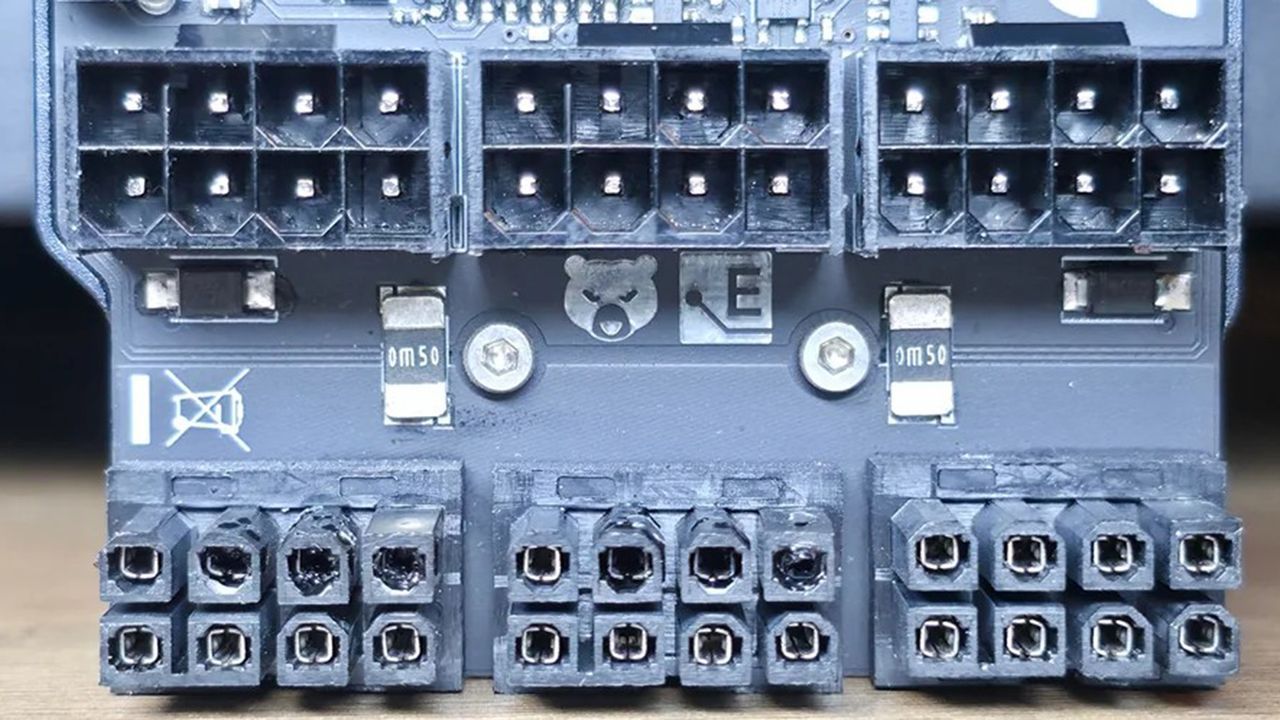
Thermal Grizzly burns out PCIe plugs on RX 7900 XTX
The myth of the 8-pin PCIe power connector suggests a simple, robust pathway for delivering massive amounts of power to modern graphics cards. But when we look closer at the complex world of PC power delivery and monitoring, that simplicity can quickly turn into a source of technical frustration.
A recent incident has cast a shadow over this assumption. A user of a high-end graphics card experienced serious damage to the power delivery system while attempting to monitor their system’s power usage. The failure wasn’t in the card itself, but in the delicate process of measurement.
The trouble involved a Thermal Grizzly WireView monitoring device. This adapter is designed to sit between the graphics card and the main power cables, allowing users to track critical metrics like power consumption, voltage, and current in real-time. However, this added layer of complexity introduced a critical vulnerability.
The user reported experiencing system freezes and black screens before discovering the physical damage. The issue was focused on the 8-pin connectors on the side of the monitoring device that connected to the GPU power path. Visible signs of overheating, including burning and melted plastic, were found on these specific connectors, even though they were fully inserted.
What does this failure tell us? It highlights that even seemingly standard electrical connections are susceptible to failure when subjected to the extreme stresses of high-power components. The damage could stem from several factors, including poor electrical contact, excessive resistance, a fault in the adapter itself, or misalignment caused by the physical setup.
While Thermal Grizzly has launched an investigation to pinpoint the exact cause of the damage—whether it originated from the adapter, the connectors, the GPU, or a combination thereof—the incident underscores a fundamental truth: power delivery systems, no matter how well-engineered, require meticulous attention to detail.
This vulnerability exists regardless of the potential capabilities of the power pins themselves. Just days earlier, we saw impressive feats of power delivery achieved through extreme hardware modification. Enthusiasts have successfully utilized heavily modified configurations, where modders replaced standard 16-pin connectors with multiple 8-pin connectors soldered directly to the PCB. These extreme setups have demonstrated the potential for 8-pin connectors to handle phenomenal loads, pulling as much as 900W and reaching speeds of 3,400 MHz.
This contrast between the practical, extreme limits of hardware modification and the subtle fragility exposed by monitoring equipment reminds us that power delivery is a delicate balance. It is a powerful system, but its reliability depends entirely on the integrity of every connection and component involved.
Buy on Amazon
Credit
