This Alienware PC needs more than upscaling to play games
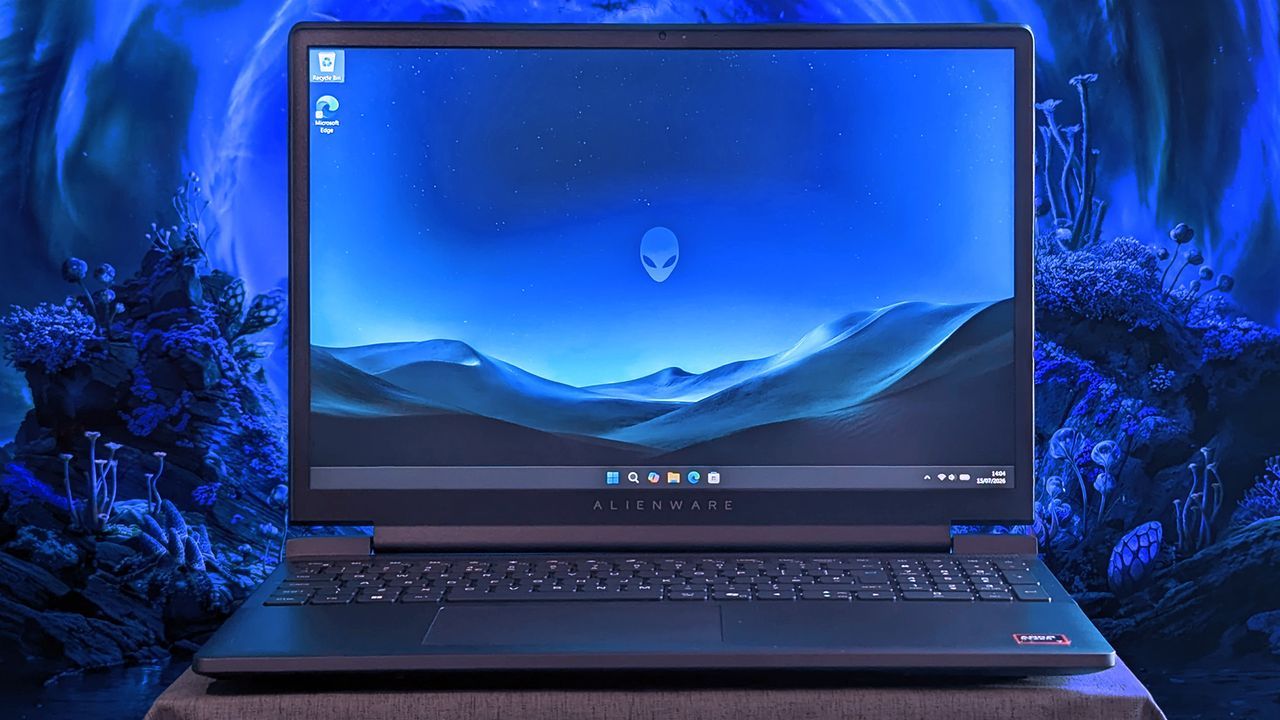
Is the Alienware 15 really an entry-level gaming machine, or is it just a bold statement about where the industry is heading? For years, Alienware has been synonymous with high-end power and uncompromising design. Yet, this particular laptop invites us to ponder a paradox: does a budget-friendly machine need to exist when sleek, powerful gaming handhelds are rapidly capturing the market?
The central question quickly shifts from existence to capability, especially when looking at the inclusion of NVIDIA’s new RTX 5050 graphics. For many, the real test isn’t just raw power, but whether this mid-range GPU offers meaningful performance gains and justifies its place in the ecosystem—particularly when paired with cutting-edge technologies like DLSS upscaling.
Let’s look at the hardware that sets the stage. The Alienware 15 starts at a competitive price point, offering configurations featuring AMD processors like the Ryzen 7 260 or Intel Core options. Base models are equipped with 16GB of RAM and a 512GB SSD, providing a solid foundation for gaming.
When we consider the potential upgrades, the machine shows flexibility. You can step up to an RTX 5050 GPU, pushing the price, or opt for the more powerful RTX 5060, which can be paired with increased memory and storage options like 32GB of RAM and 1TB SSDs. This setup proves that while entry-level means compromise, Alienware still offers adaptable pathways for enthusiasts.
While the exterior boasts a striking, albeit somewhat heavy, presence—we’re talking about a chassis weighing 4.89 lbs (2.22 kg)—the internal engineering is designed for capability. The screen itself is a sharp 15.3-inch WUXGA display running at a smooth 165Hz refresh rate, perfect for keeping pace with fast-moving gameplay.
However, the experience isn’t without its quirks. Noise is perhaps the most immediate barrier to entry. Gaming sessions bring out the fans to full throttle, resulting in a noticeable roar that you will likely need to mitigate with headphones. While Alienware offers performance modes like “Stealth” mode, achieving true silence remains elusive when demanding games are running.
The thermal management is working hard, keeping temperatures managed, but the keyboard itself can get warm during intense play, leading to minor discomfort. This experience reminds us that even powerful machinery needs refinement; some users found relief by opting for external peripherals to manage the heat generated by the powerful internal components.
On the performance front, the RTX 5050 proves itself capable. It manages to keep demanding titles like Cyberpunk 2077 running smoothly when leveraging DLSS upscaling, achieving impressive frame rates. While it doesn’t quite match the absolute peak of the high-end GPUs, its ability to deliver playable, ray-traced visuals makes it a compelling choice for those seeking quality without breaking the bank.
Ultimately, if your priority is entry-level NVIDIA gaming power that doesn’t demand a full desktop build, and you are willing to manage some noise and storage limitations, the Alienware 15 offers a solid proposition. It’s a machine that will absolutely play your games—especially those utilizing DLSS—and it certainly proves that dedicated, portable gaming solutions are here to stay.
You should consider this laptop if you want a modern, entry-level NVIDIA gaming experience without the commitment of a full desktop. Don’t buy it if quiet portability is your absolute top priority, but if budget meets capability, the Alienware 15 delivers on its promise.
Buy on Amazon
Credit
