TIMBER 4.19 Update: AMD Blackwell Extension Support Download
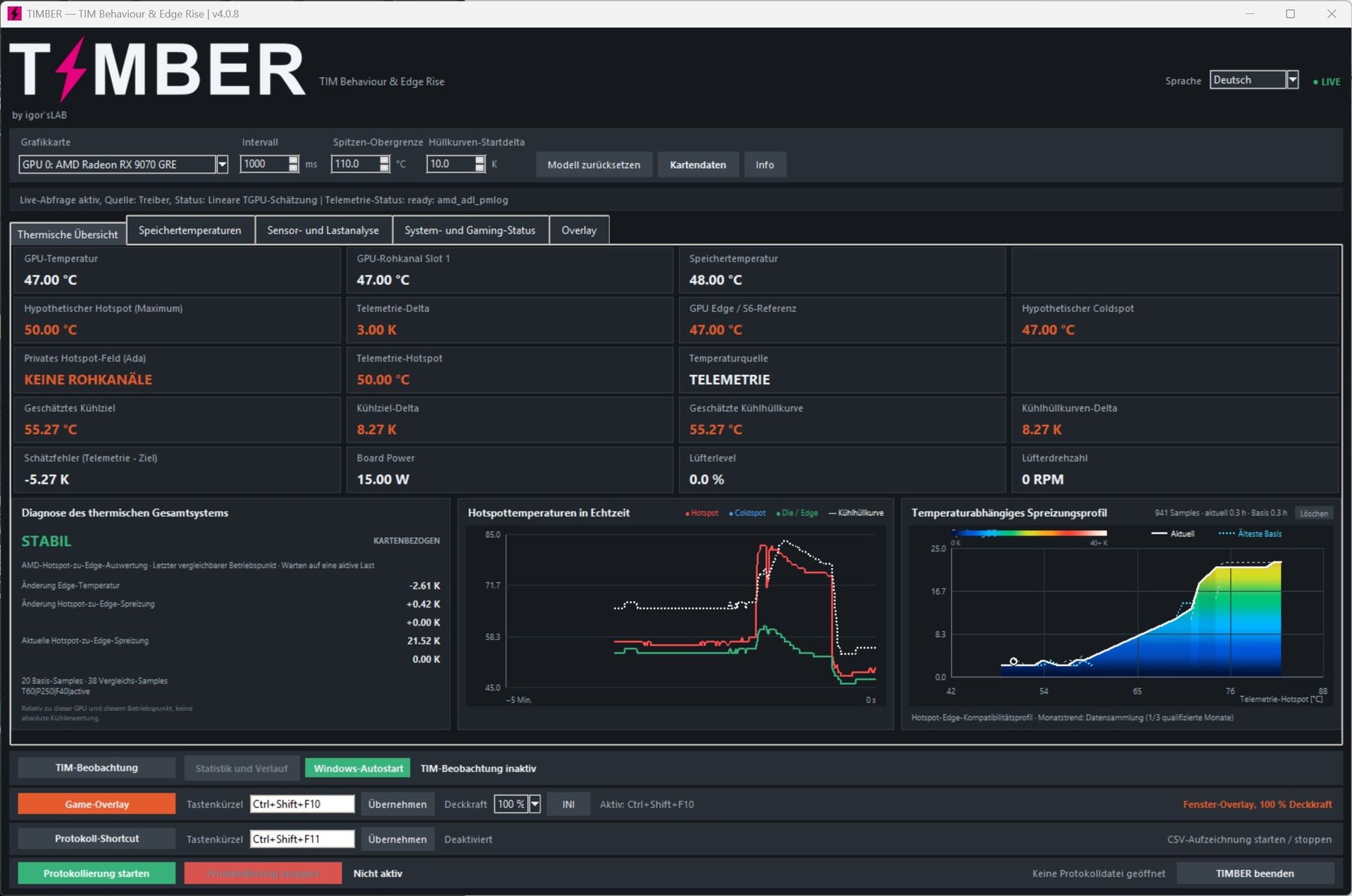
Thermal management in high-performance graphics cards is a constant battle, and knowing when that battle is taking a turn for the worse is crucial for both enthusiasts and system stability. Enter TIMBER, a diagnostic tool that moves beyond simple temperature readings to reveal the hidden truths about how heat is actually being transferred within a GPU.
The concept behind this detailed thermal analysis originated with NVIDIA’s Blackwell architecture, which utilized multiple direct internal temperature sensors on the GPU die. This allowed for an incredibly spatially resolved view of the chip, enabling engineers to distinguish between cold, intermediate, and hot spots with precision.
While this level of sensor detail provides unparalleled insight, it’s not universally available across the industry. When applying this methodology to AMD Radeon graphics cards—specifically the RX-7000 and RX-9000 series—the challenge shifts. Since AMD does not expose a comparable matrix of direct die sensors through public interfaces like ADL or ADLX, TIMBER adopts a clever approach: it relies on the telemetry data that is actually available, deriving its own technically sound evaluation model from it.
Instead of relying on raw temperature alone, TIMBER focuses on the critical relationship between two core measurements: the general GPU temperature and the Hotspot temperature—the hottest point on the die. The real diagnostic power lies in calculating the spread between these two values.
This spread is far more indicative of thermal health than either temperature measurement alone. An absolute temperature, such as 75 degrees Celsius, tells you little about the quality of the cooling; it depends heavily on ambient air, fan speed, power consumption, and case ventilation. A system can operate perfectly fine at a comfortable 75 degrees while simultaneously suffering from severe internal thermal degradation.
The difference between the Hotspot and the Edge temperature reveals how effectively heat is being channeled away from the processor. If this spread widens over time under stable operating conditions, it signals a physical issue—potentially dried-out thermal paste, poor contact pressure, or mechanical settling between the GPU and its cooler.
TIMBER’s strength lies in continuously recording this Hotspot-to-Edge spread alongside all relevant operating data: power consumption, clock speeds, utilization rates, fan settings, and memory temperatures. This rich, longitudinal dataset allows the software to establish individual thermal reference profiles for each card. It doesn’t just answer, “How hot is the GPU right now?” It asks a more important question: “Does this specific GPU behave differently in thermal terms today than it did three months ago under comparable load?”
This ability to track subtle, cumulative changes is game-changing for long-term system health monitoring. While an increase in absolute temperature might be masked by external factors like higher ambient heat, a widening spread under identical conditions points directly toward a deterioration of the thermal interface material or the cooling system itself.
By focusing on the dynamic relationship between the hotspot and the edge, TIMBER provides a robust method for detecting subtle thermal failures long before they lead to critical overheating. The most significant finding is not a single high temperature reading, but the systematic increase in that thermal spread—a clear indicator that local heat transfer efficiency has begun its slow, inevitable decline.
For those seeking deep insight into their hardware’s longevity and thermal integrity, this analytical approach transforms raw sensor data into actionable intelligence about the physical state of the cooling system.
TIMBER 4.0 is here: IBHE becomes a complete tool for GPU, GDDR7 and TIM analysis (Download)
Credit