Tomb Raider runs on a 1W chip YouTuber hack
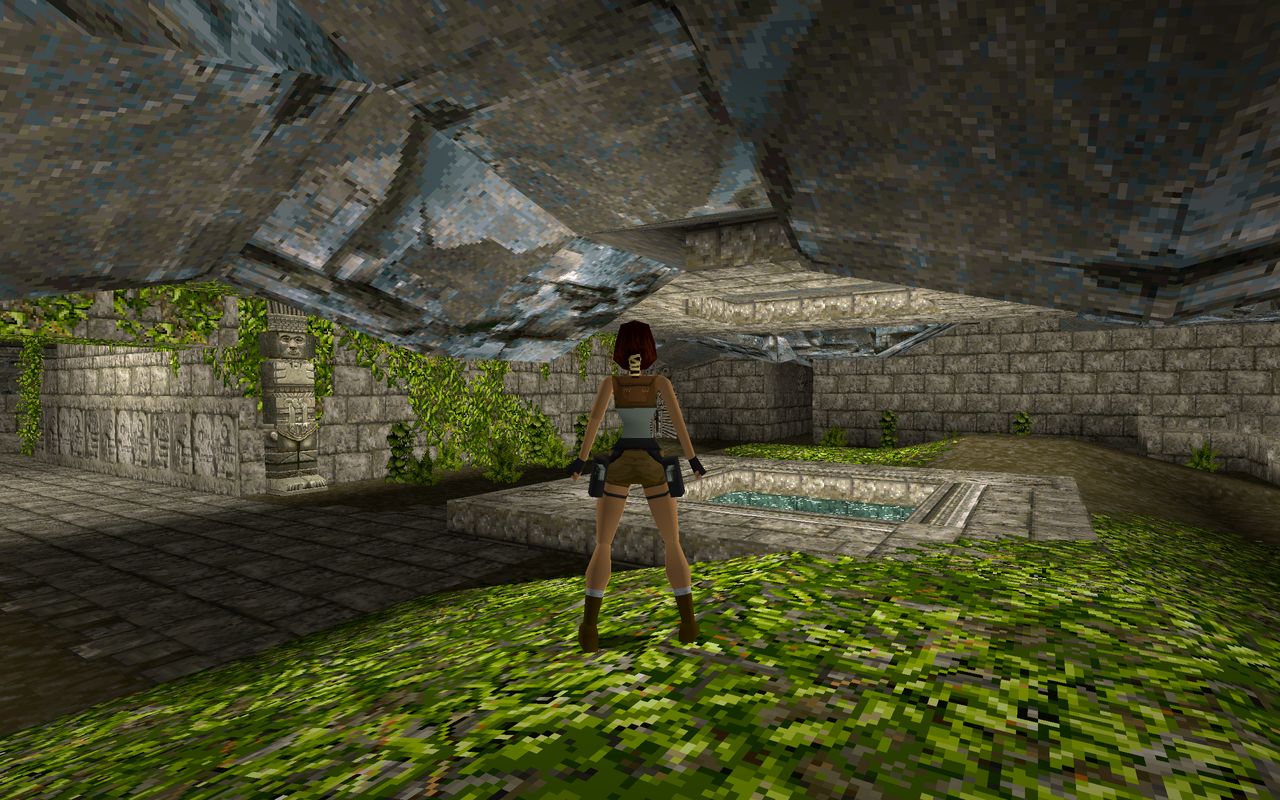
We often associate modern PC gaming with high demands and energy consumption, making the pursuit of efficiency feel like a niche concern. But what if the secret to bringing classic gaming back to life lay not in massive power draws, but in ingenious, minimalist hardware?
For retro gaming enthusiasts, the pursuit of energy efficiency is a far more appealing goal. Hardware creator Alejandro Villegas Alonso has demonstrated that highly immersive experiences don’t require a power plant; they require clever engineering. He recently shared a clip showcasing classic titles like Tomb Raider running on an astonishingly low-power chip.
The star of this low-power performance is the ESP32-P4 microcontroller, a lightweight 32-bit RISC-V processor featuring dual 400 MHz cores. This chip is a marvel of efficiency, sipping a mere 1 watt of energy during operation, according to its technical specifications.
While this kind of hardware is typically found in embedded devices like cameras, Alonso has pushed its boundaries. He successfully ported a version of the original Tomb Raider 1 engine, known as OpenLara, onto this chip. This project is a testament to how powerful creativity can be born from humble, accessible components.
The innovation goes beyond just the chip. The setup utilizes the ESP32-P4-Function-EV-Board, which conveniently includes a seven-inch capacitive touch screen and a camera module. This board, available for under $30, makes sophisticated computing accessible to hobbyists seeking to experiment with hardware.
The achievement is further enhanced by the software architecture. The port features a software RGB565 renderer and a Pixel Processing Accelerator, allowing the system to scale the display up to 1024 x 600 pixels. While the core chip handles the processing, the system leverages integrated components like an ES8311 codec for stereo audio and a USB keyboard for game input.
This work highlights a broader trend in DIY computing. Just as similar SoCs are being used in credit-card-sized computers and pocket-sized emulators, the development of low-power, customizable hardware is paving the way for a new generation of retro gaming experiences. Creativity truly knows no bounds, and the future of gaming might just be smaller, smarter, and remarkably energy efficient.
Buy on Amazon
Credit
