Trapped atoms: The path beyond physical qubit limits
The Invisible Revolution: How Neutral Atoms Are Rewriting the Rules of Quantum Computing
As the race for fault-tolerant quantum computing intensifies, the focus is shifting from exotic materials to revolutionary physical systems. At the forefront of this revolution is neutral atom quantum computing, a modality that is rapidly gaining traction among scientists and major industry players. If superconducting qubits and trapped ions represent established paths, neutral atoms are carving out a unique territory defined by flexibility, stability, and an architecture that looks surprisingly familiar to our classical world.
So, what exactly makes these systems so compelling? Instead of relying on fragile electronic states or complex cryogenic infrastructure, neutral atom systems harness tightly focused laser beams—known as optical tweezers—to trap individual atoms in precise spatial arrangements. Each trapped atom acts as a qubit, and quantum logic gates are performed by briefly exciting these atoms into high-energy Rydberg states, creating long-range interactions that serve as the building blocks for computation.
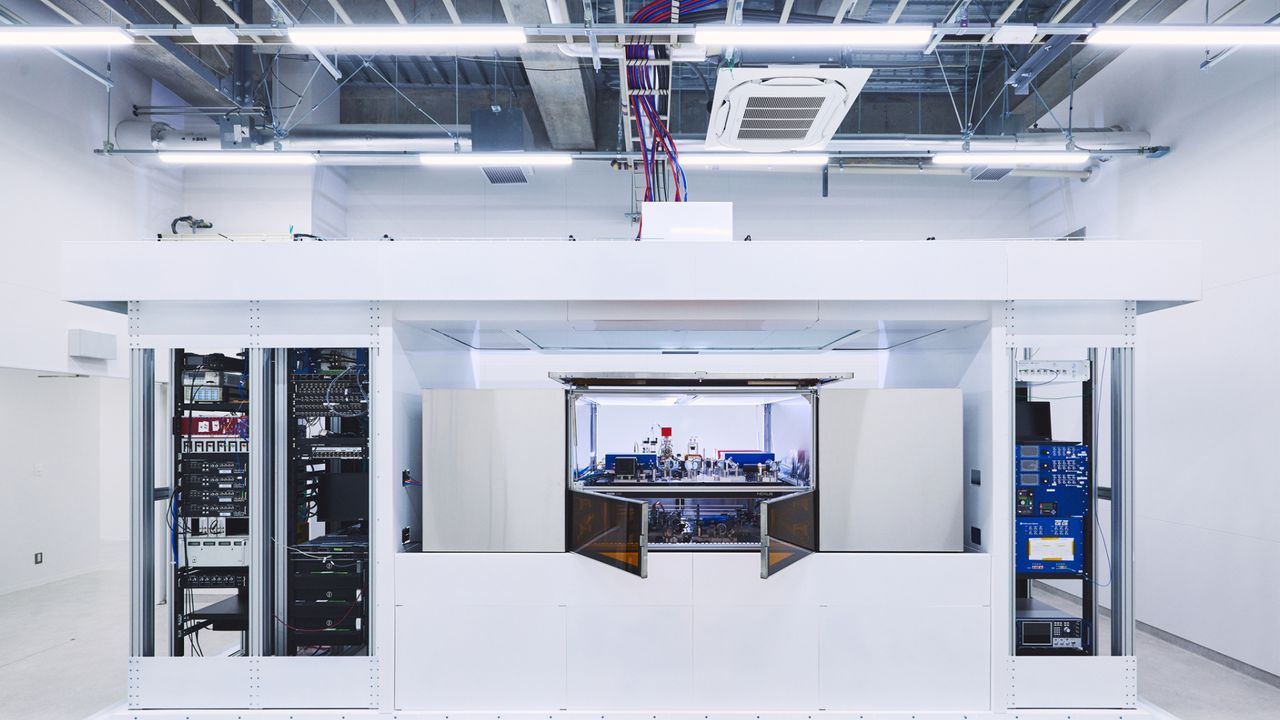
The real game-changer is the environmental advantage. Unlike superconducting systems, which demand extreme cooling to millikelvin temperatures across an entire chip, neutral atom hardware operates near room temperature. This dramatically simplifies the cooling infrastructure, moving quantum computing closer to deployable data center environments. The core quantum hardware itself can be contained within a small vacuum cell, demonstrating remarkable efficiency; some systems, like Pasqal’s, report system power consumption that fits comfortably inside a standard server rack.
This approach offers structural advantages that are incredibly difficult to replicate in other modalities. Because every neutral atom is fundamentally identical, the system gains inherent uniformity—a physics guarantee rather than an engineering achievement. Furthermore, these systems are inherently reconfigurable. Unlike fixed superconducting chips where connectivity is determined by physical wiring at fabrication time, neutral atom arrays can be dynamically reprogrammed mid-computation. Atoms can be physically shuttled to interact with one another, making the processor’s connectivity software-defined rather than hardware-fixed.
To manage this dynamic process efficiently, systems are often organized into a “zoned architecture.” This partitions the atomic array into regions for Storage (where atoms rest isolated), Entangling (where gates are performed between neighboring atoms), and Readout zones. This spatial separation allows researchers to measure specific parts of the system—essential for real-time error correction—without disturbing the ongoing computation, providing a potent architectural solution for managing complexity.
Despite these advances, challenges remain. The most significant hurdle is atom loss: stray gas molecules or thermal fluctuations can cause trapped atoms to drift away, leading to an erasure error. However, because the spatial location of the lost atom is precisely tracked by continuous imaging, this error is easier to manage than many other types of quantum errors. When a physical atom is lost, it is simply replaced from a reservoir, and the system’s powerful error-correcting codes step in to reconstruct the logical state.
The choice of physical qubit also reflects a broader trend in quantum engineering. While Rubidium-87 atoms remain the well-trodden path due to mature tooling, some innovators like Atom Computing have opted for strontium atoms. Strontium offers slightly longer coherence times, providing a tangible advantage in avoiding environmental noise that plagues rubidium systems. This illustrates a key principle: the optimal qubit technology is relative to the expertise of the team building the machine.
Three major companies are leading this charge with distinct strategies. QuEra, spun out of Harvard and MIT, has set a scientific pace, demonstrating world-record results in logical qubits and establishing neutral atoms as a leader in quantum error correction. Their focus is on pushing towards scalable, fault-tolerant systems, targeting millions of reliable operations by the end of the decade.
Atom Computing focuses on commercial delivery, strategically partnering with Microsoft to integrate robust error-correction software with their hardware. They are uniquely shifting the market narrative from physical qubit counts to logical qubits—selling error-corrected computational units—with ambitious plans for scaling through an approximate tenfold increase per generation. Their work is already translating into practical applications, exemplified by systems like Magne, which aims to deliver commercial quantum computers with logical qubits as their primary specification.
Meanwhile, Pasqal is focusing on infrastructure and co-processing. Emerging from foundational physics, the company deploys neutral atom processors directly inside high-performance computing centers globally, offering services that optimize logistics and materials science simulations for major clients like Thales and EDF. Pasqal’s roadmap emphasizes an analog approach, evolving the entire atom array as a continuous quantum system rather than simply executing discrete instructions. This infrastructural focus positions them to bridge the gap between cutting-edge research and enterprise-level application.
Ultimately, the future of quantum computing hinges on moving beyond raw qubit counts. The industry’s true metric for fault tolerance is the ratio of physical qubits required to achieve one reliable logical qubit—a figure where neutral atoms currently sit at approximately 5:1. This multi-modal approach, backed by external validation from bodies like DARPA, signals that neutral atom quantum computing is not just a promising experiment, but a crucial, highly validated pathway toward building the fault-tolerant systems that will eventually outperform classical machines.
Buy on Amazon
Credit