Unreal character running through a Unity world
The world of gaming is on the brink of a massive architectural shift. A pioneering collaboration between Unity and Epic Games is proving that the future of interactive entertainment lies not in isolated worlds, but in interconnected ecosystems. This breakthrough demonstrates how disparate game engines can merge seamlessly, paving the way for a truly unified metaverse.
The concept took center stage recently at the Unite Seoul keynote, where Unity showcased an impressive demonstration: a Unity game rendering natively within an Unreal Engine environment. This wasn’t just a visual trick; it was a deep technical synchronization of complex systems that promises to redefine cross-platform development.
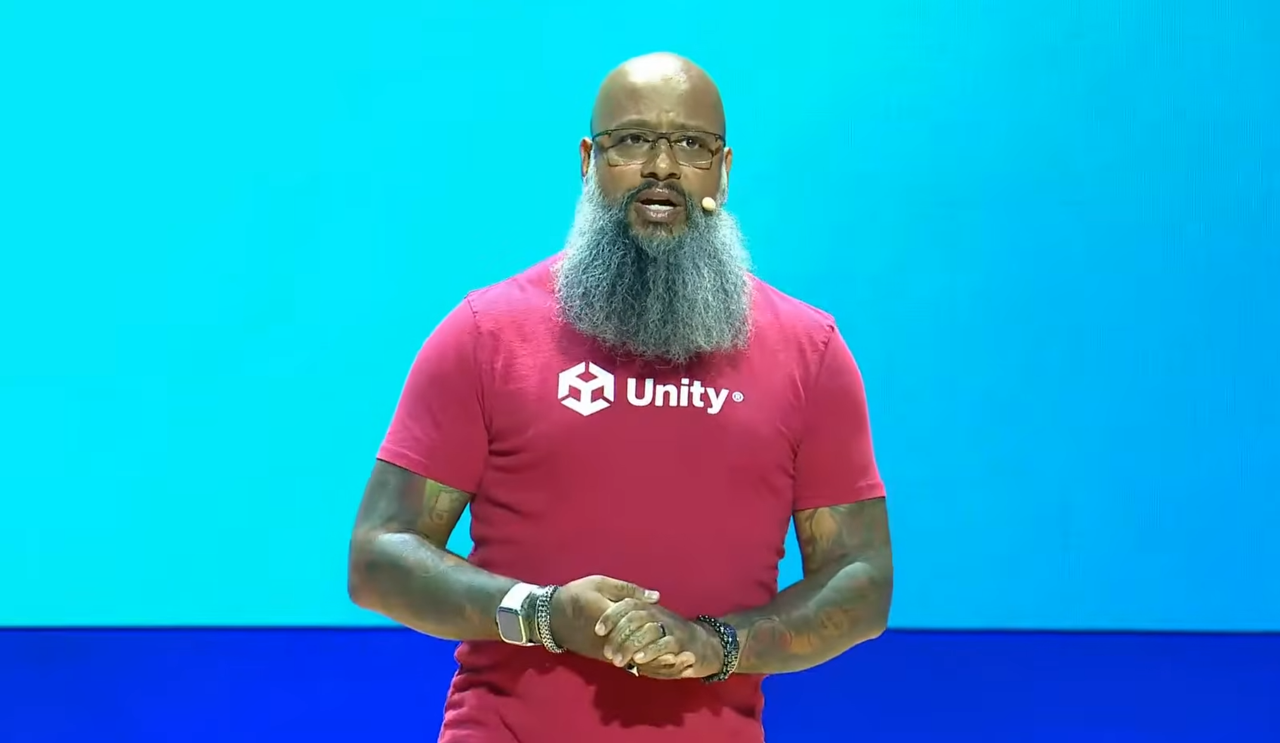
Fantasy Kingdom served as the proving ground for this ambitious project. As Unity senior director of technical product management James Stone highlighted, the demonstration showed what is possible when engines share a foundational space. “What you’re seeing here is a game simulated in Unity, rendered with Unreal,” he explained. “But it’s not just about visuals; it’s about synchronization.”
The true magic lay in the real-time synchronization. The demonstration proved that elements like physics, lighting, and player input could flow seamlessly between the two engines. An avatar running through a Unity world was rendered with the physical fidelity and environment complexity provided by Unreal Engine—all operating in perfect synchronization. This capability moves beyond simple streaming; it establishes a shared foundation where content truly lives and interacts across different technological frameworks.
This ambition aligns perfectly with Epic Games CEO Tim Sweeney’s vision for an interconnected gaming universe. Sweeney championed the idea that connecting these elements is far more valuable than remaining separate, emphasizing that the value of connecting is higher for everybody. His exclamation, “Connect ALL the engines!” captured the spirit of this new era.
This partnership isn’t just a technical experiment; it represents a significant step toward realizing the full potential of the metaverse—a space where content, economies, and social features flow effortlessly across platforms and games. Unity is actively exploring avenues to bring its developers directly into Fortnite, establishing new pathways for content distribution.
Looking ahead, the integration between these giants is set to accelerate. The plan includes making Unity’s enhanced integration available in early access in 2027. Furthermore, Unity is not resting on its laurels; the next evolution of its engine, Unity 7, is already underway. This upcoming version promises advanced features, including new rendering techniques, expanded monetization tools, and a new protocol designed to connect generative AI coding agents, ensuring that the foundation for interconnected gaming continues to evolve rapidly.
Buy on Amazon
Credit
