
UV Printers & Custom Builds Take Over Open Sauce 2026
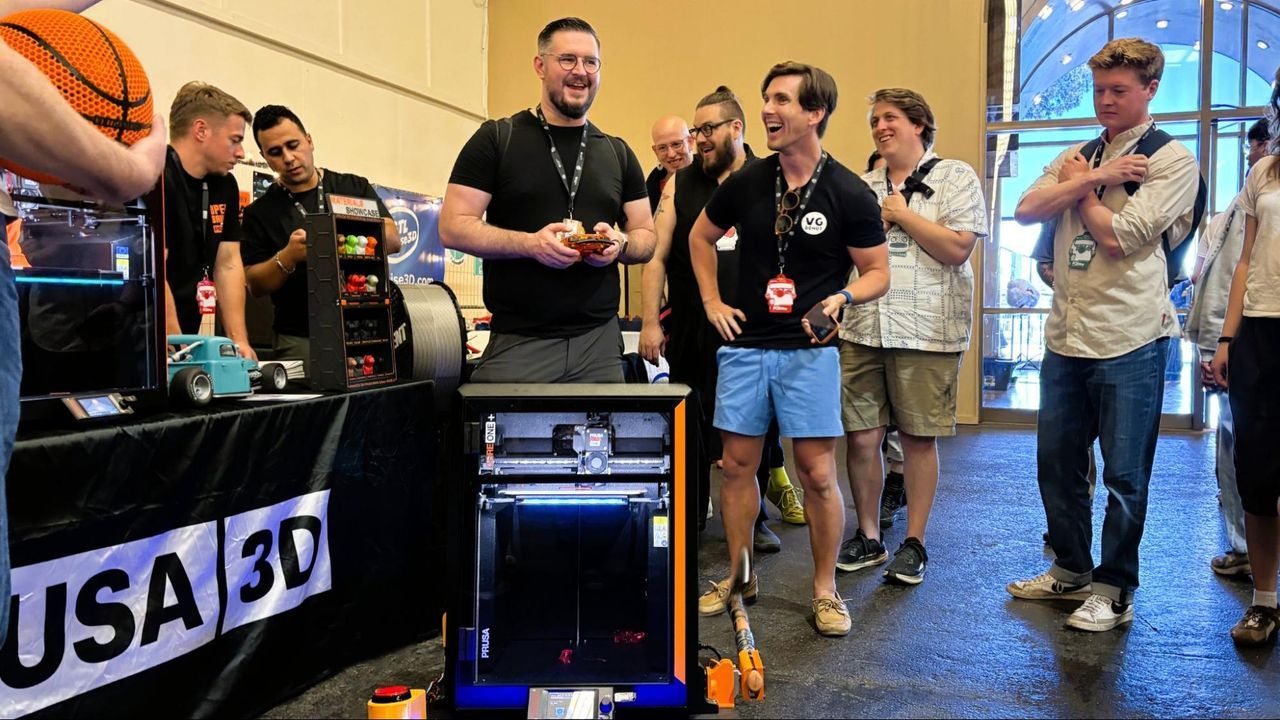
If you want a front-row seat to the future of innovation, you need to look past the typical tech expos and head to the world of makers. Events like the Open Sauce festival in San Mateo, California, serve as vibrant hubs where inventors, artists, and enthusiasts gather to celebrate the raw, transformative power of additive manufacturing.
These gatherings are more than just showcases for new gadgets; they are living laboratories demonstrating how technology is being used to redefine design, prototyping, and creation. At the heart of the movement is a shared passion for pushing boundaries, turning digital designs into tangible reality, whether that’s a complex mechanical part or a whimsical piece of art.
This year’s festival showcased a stunning range of creativity. From spectacularly large, 3D-printed fighting tops and arenas to intricately designed PLA and wood PLA violins, the exhibits proved that 3D printing is not just for engineers—it’s a medium for boundless imagination. Collaborations flourished, with teams demonstrating how digital files can be transformed into incredible physical objects.
The innovation wasn’t limited to aesthetics; it extended deep into engineering. Attendees explored machines designed to challenge conventional printing methods. For example, some teams demonstrated the LDO Positron upside-down 3D printer, ingeniously folded down to save space, making large-format printing portable and accessible. Others explored systems like Unlayered 3D, which ditches traditional layering to achieve stronger, smoother results using tilting print heads, effectively eliminating the need for supports.
In the professional arena, established players and emerging startups were equally engaged. Prusa Research showcased their advanced tools, including the revolutionary CORE One+ INDX toolchanger, highlighting how sophisticated automation is streamlining industrial production. Other exhibitors explored collaborative ventures, such as the emoji x Centauri Carbon 2 partnership. These projects demonstrate that the future of manufacturing is collaborative, blending cutting-edge hardware with playful brand synergy.
Beyond traditional plastics, the festival spotlighted experimental methods for materials and printing. Students from UC Berkeley unveiled the UC Berkeley OpenCAL V2>, an open-source resin printing method that uses video projection and flash-curing to create models in minutes. This approach signals a major shift in how we interact with materials, offering speed and unprecedented complexity.
Sustainability and clever engineering also found their place on the show floor. Initiatives like Peninsula Precious Plastics demonstrated how waste can be repurposed, showing how plastics can be shredded and injection-molded into new, sustainable products. Even in the realm of miniatures, makers designed clever solutions, with projects like @TheBasedDoge’s array of mini 3D printers built using repurposed components like DVD motors and CD drives.
The convergence of these diverse projects—from large-scale industrial tools and experimental UV printing technologies, to sustainable recycling methods—solidifies one truth: the maker community is actively engineering a world where impossible ideas are simply the next project waiting to be printed.
Buy on Amazon
Credit