VRAM limits Qwen 3.8 27B inference performance
Ditching the Cloud: Can Local AI Hardware Truly Deliver Frontier Intelligence?
The open-weight AI movement has sparked intense excitement, but recently, that curiosity has turned into a concrete hardware challenge. When Alibaba released the Qwen 3.8 27B model, it immediately ignited a fierce debate: can enthusiasts ditch expensive cloud subscriptions like Claude or ChatGPT and run frontier-level intelligence right on their local machine? The answer, as is often the case in the world of large language models, is far more complicated than just comparing VRAM totals.
The promise of running massive models locally often leads to breathless claims of incredible throughput, but the real test isn’t just whether the model fits; it’s whether the system can handle the complex math of long-context inference and high-speed token generation. We put the Qwen 3.8 27B model through the grinder, testing its performance across a spectrum of hardware—from high-end NVIDIA cards like the RTX 5090 to more specialized systems like the DGX Spark and Apple’s Mac Studio.
The challenge lay in the fine details. Simply loading the model is one thing; making it perform interactively with a massive context window of 262,000 tokens is another entirely. The experience proved that the performance isn’t dictated by the GPU’s raw power alone, but by the supporting software stack and how intelligently the system manages memory and data movement during the inference process.
Our testing revealed critical distinctions between different methods of running the model. Running the model with standard tools showed significant bottlenecks, often stalling the process for frustratingly long periods, especially when trying to achieve long context lengths. This suggested that simple, unoptimized methods weren’t cutting it for truly demanding, agent-like tasks.
To unlock the full potential of models like Qwen 3.8 27B, we had to explore more sophisticated inference engines, such as vLLM and SGLang. While these methods brought dramatically improved throughput, they also highlighted the underlying hardware limitations. For instance, achieving the full context length required not just a single powerful card, but often a multi-GPU setup, demonstrating that maximum performance demands serious resources.
For the absolute peak performance, a setup involving multiple RTX 5090s yielded incredible results, achieving speeds well over 100 tokens per second with sophisticated optimizations. However, the cost of replicating this kind of performance—involving multiple high-end GPUs—escalates rapidly, hitting figures well into the tens of thousands of dollars.
Meanwhile, systems with unified memory architectures, like the Mac Studio, presented a different trade-off. While offering excellent memory bandwidth for decoding, the overall time-to-first-token was often dictated by the slower prompt processing capabilities of the CPU, revealing that a bottleneck often shifts from pure compute power to memory bandwidth and system-level efficiency.
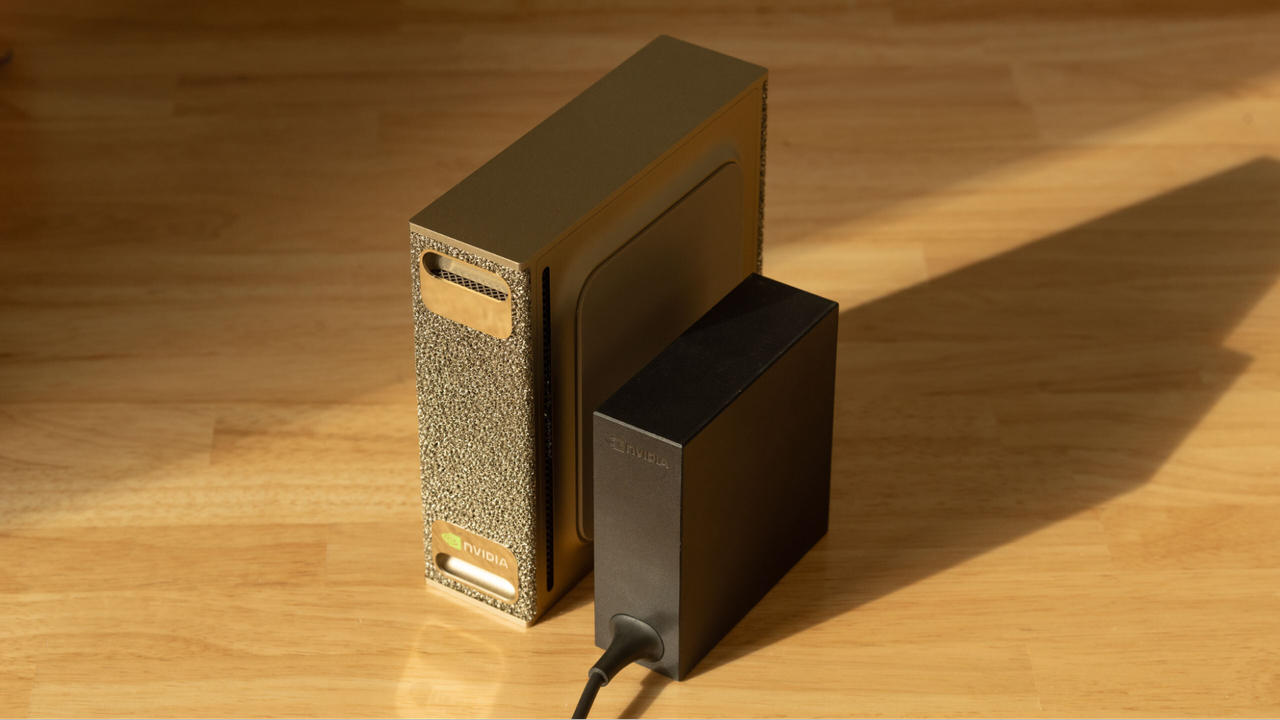
The results also painted a clear picture for other platforms. Older cards, like the RTX 3090 and 4090, could load the model but were constrained to much shorter context windows, confirming that VRAM capacity alone is not the full story. Even specialized platforms like the DGX Spark showed promise in prefill speed, suggesting they could be viable options for serving dense models efficiently.
Ultimately, the journey into local AI inference is less about finding a magic GPU and more about meticulous benchmarking. While the dream of running everything locally is exciting, the reality is that delivering frontier intelligence locally requires careful experimentation. Don’t be fooled by headline throughput numbers; true performance depends on selecting the right model runner, understanding memory constraints, and accepting that high-end, real-world results often come with a substantial hardware investment.
Buy on Amazon
Credit