VRM Thermal Testing budget vs high-end boards does it matter
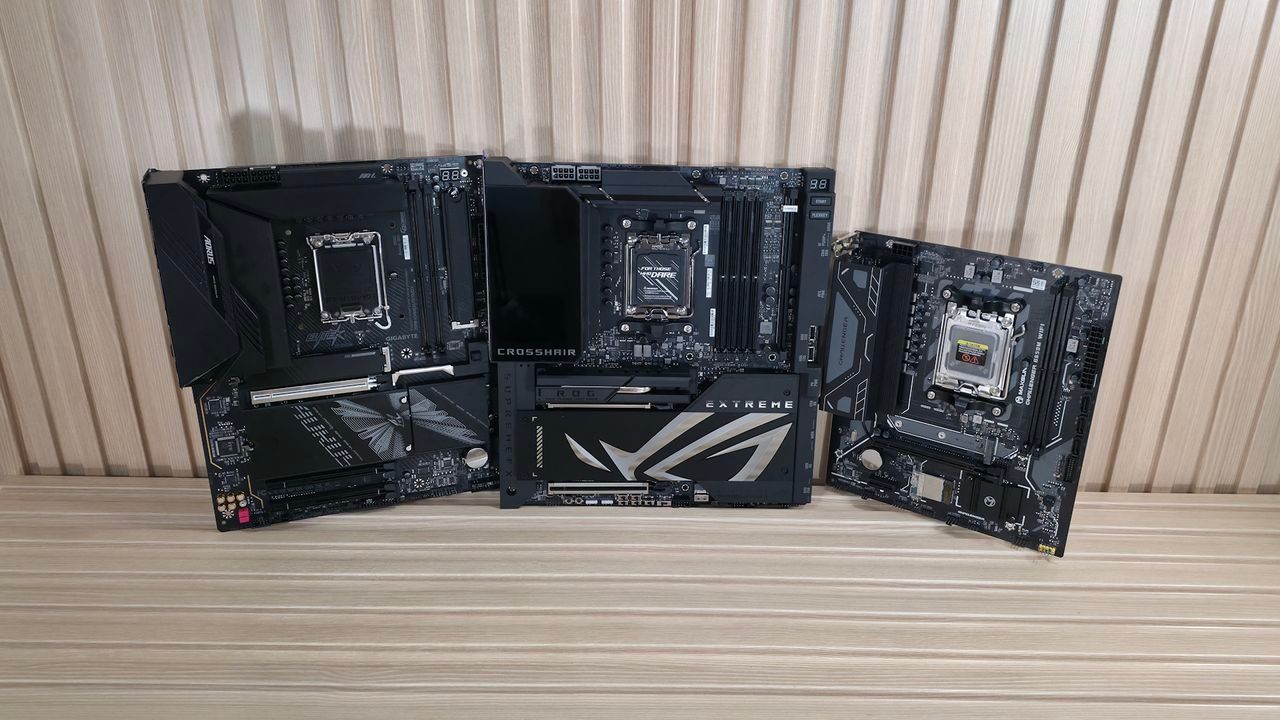
The Hidden Powerhouse: Why Your Motherboard’s Power Delivery Determines Your PC’s Destiny
When you step into the world of PC building, especially when selecting a motherboard, you quickly realize it’s more than just a circuit board; it’s the central nervous system managing immense power. For the dedicated enthusiast, this decision often feels like navigating a dense jungle of acronyms—CPU compatibility, port types, aesthetics—but tucked beneath all that surface lies one critical component whose quality dictates true performance and longevity: the Voltage Regulation Module, or VRM.
So, what exactly is a VRM and why should you care about its finesse? Simply put, the VRMs are the unsung heroes responsible for taking the raw 12-volt power from your power supply and meticulously refining it into the precise, stable voltages (around 1 to 1.5V) that your CPU and other components demand. They act as advanced DC-to-DC converters, expertly smoothing out electrical noise and voltage spikes that could otherwise threaten your processor. If you care about sustained performance and avoiding catastrophic crashes, understanding VRM quality is non-negotiable.
A motherboard doesn’t rely on a single module; instead, it uses a complex group of parts working in concert—a “power phase.” The brain controlling this operation is the PWM controller, which dictates voltage delivery in real-time. This system is supported by MOSFETs, which act as hyper-speed switches to regulate current flow, chokes that smooth pulsating energy into steady current, and capacitors that store and release vital energy. The synergy of these components determines how effectively power flows across the board.
The quality of this setup directly impacts thermal performance. When VRMs are stressed by high power demands—especially from flagship processors like Intel Core Ultra or AMD Ryzen 9—they generate significant heat. Most boards address this with metal heatsinks, but if those modules overheat, the CPU will inevitably throttle performance to protect itself. It is this internal thermal management that enthusiasts must master.
The difference between a good VRM and a great one often comes down to the sheer capacity. Enthusiast-class chipsets (like Z890 or X870E) are equipped with vastly superior power delivery components, featuring more phases and higher current capacity (often 80A to 110A MOSFETs). Mainstream and budget boards, conversely, typically use fewer phases and lower amperage ratings.
This distinction isn’t just academic; it affects your build strategy. Entry-level motherboards are designed for simple tasks and office productivity and may struggle under heavy multi-threaded workloads if you push the CPU too hard. Mid-range boards strike a perfect balance, offering solid performance suitable for most gaming and productivity setups with reasonable overclocking potential. High-end boards offer unlimited headroom for any processor or extreme overclocking scenarios.
When comparing power delivery systems, it’s helpful to look beyond simple phase counts. A board with twenty phases running at 110A offers significantly more total output capability than one with twelve phases capped at 60A. The goal is not just having enough amperage; it’s about achieving the necessary headroom for sustained performance without stressing the components.
Furthermore, cooling cannot be overlooked. Powerful VRMs require robust thermal solutions—massive heatsinks, heat pipes, and improved thermal pads—to dissipate the generated heat effectively. A board lacking adequate cooling on its power delivery system risks throttling, regardless of how many phases it technically possesses. For powerful processors, ditching the bare-bones heatsink on a budget board is a mistake if you plan on sustained heavy use.
Real-world testing confirms that for most mainstream and enthusiast setups, the performance differences between high-end boards and capable mid-range boards are minimal. The vast majority of systems can perform admirably. However, when you are pushing your CPU to its absolute limits or engaging in aggressive overclocking, prioritizing robust power delivery becomes a top necessity, ensuring longevity and peak performance.
Ultimately, there is no single motherboard solution. You don’t need an extreme-class VRM for every user. For typical gaming and productivity, a mainstream board provides excellent value. But if your workflow involves heavily multi-threaded tasks or pushing flagship CPUs to their thermal limits, investing in higher-quality VRMs is the smart move—it’s the difference between surviving a demanding workload and truly thriving in it.
Buy on Amazon
Credit