Zen 6 sparks hope for beefy desktop chips Zen 7 and 8
While much of the focus in the tech world centers on consumer gadgets, there is a bubbling conversation happening among silicon enthusiasts about what AMD’s latest server developments could mean for your next desktop chip. Even when discussing high-end data center processors, one can’t help but speculate on how those advancements will trickle down to our everyday machines.
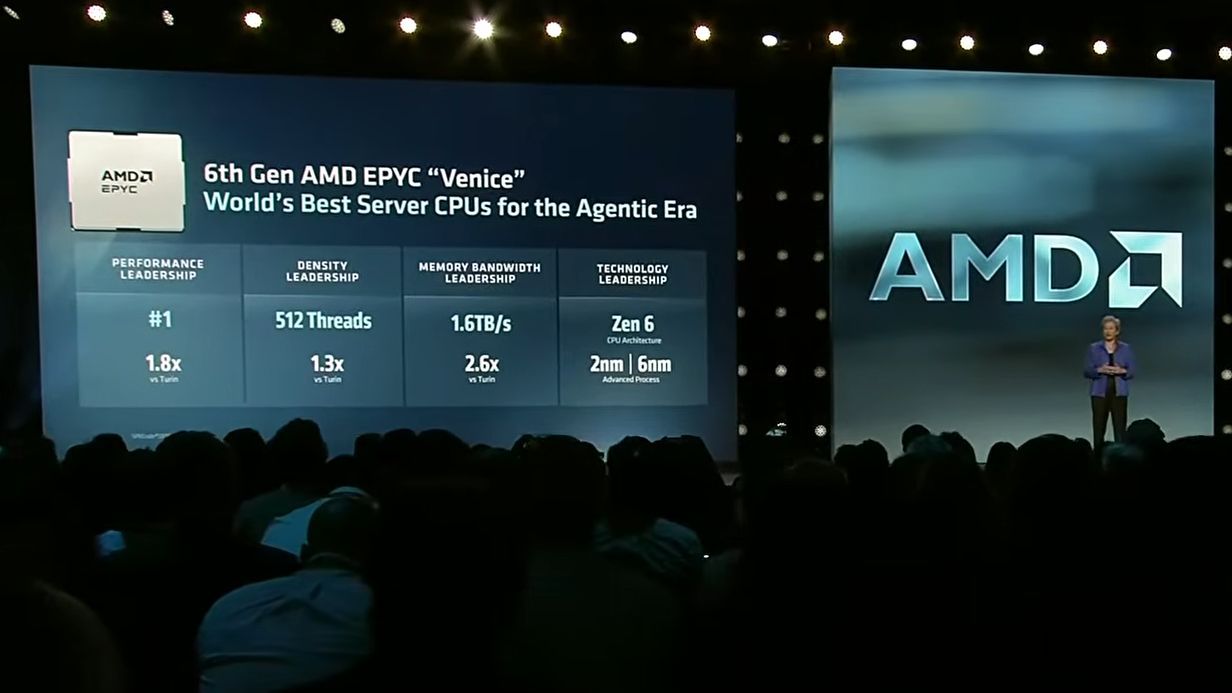
AMD has recently revealed details about its upcoming Zen 6-based ‘Venice‘ server processor platform at the Advancing AI event>. Though this was a server presentation, experts are already trying to infer what these innovations imply for the Zen 6 desktop chips, which are anticipated to launch either late this year or early in 2027.
The performance claims from AMD CEO Dr. Lisa Su paint an exciting picture. She highlighted that the new Zen 6 core boasts a significant generational jump, delivering up to 1.8x more performance than its Zen 5 counterpart, Turin. This impressive figure is rooted in a combination of higher instructions per clock (IPC) and increased frequency.
To understand the magnitude of this gain, we have to look at the context. The server processors are designed to run at up to 5 GHz, matching the same maximum clock speed seen in Zen 5 Epyc chips. This suggests that AMD’s focus isn’t solely on pushing the clock speed limits but on increasing efficiency and instruction execution.
This leads to a crucial speculation: if the maximum clock speeds don’t see massive changes, the extra performance comes primarily from improved IPC. This gain in instructions per clock would directly translate to Zen 6 desktop chips utilizing the same core architecture, promising them to be both more powerful and significantly more efficient than previous generations.
The sense is hopeful. The apparent lack of dramatic clock speed changes coupled with a huge performance claim suggests that the architectural efficiency improvements are the real game-changer for future desktop CPUs. This ripple effect promises more powerful and nimble chips for those waiting for their launch.
Looking further ahead, AMD has also outlined an ambitious roadmap for its server architecture, establishing a predictable yearly cadence. Zen 7 is slated for release in 2027, followed by Zen 8 in 2028. While desktop chips will naturally lag behind the server launches, this consistent timeline provides a clear trajectory for future processor development.
Credit
