China’s chip blockade targets AI interconnects
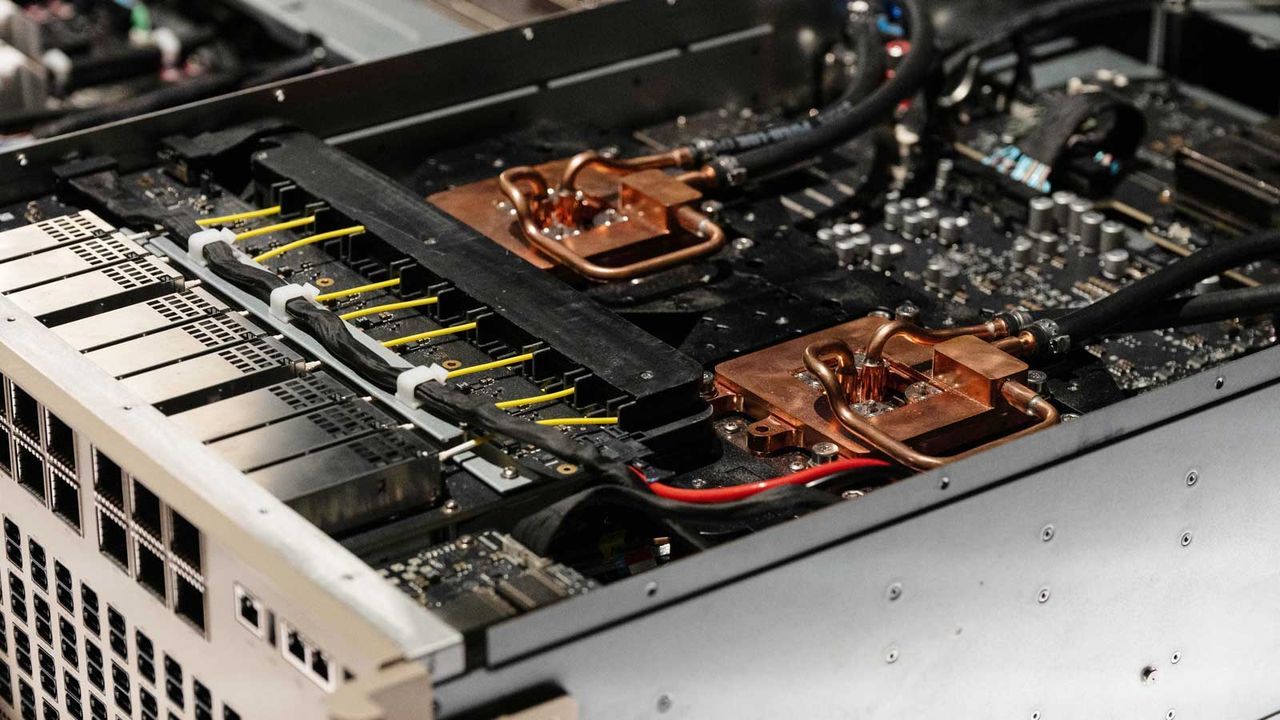
The race for artificial intelligence is no longer just about faster processors and more memory; it’s a high-stakes battle fought in the invisible wires connecting data centers—and right now, geopolitics is creeping into that fight. As hyperscalers pour trillions into building next-generation AI infrastructure, the real bottleneck has shifted from silicon chips to the physical pathways themselves.
At the heart of this modern dilemma lies optical interconnects. These technologies use lasers instead of traditional copper wiring, promising to dramatically increase bandwidth, slash latency, and reduce the power consumption necessary for massive data transfers. The vision is futuristic: integrating an optical networking interface directly into the chip itself, allowing components to collaborate seamlessly across vast distances, making data centers not just powerful, but infinitely more efficient and scalable.
But this cutting-edge future hinges on a fragile global supply chain. And right now, the United States is positioning itself to control its own path forward by scrutinizing who builds these essential networking components. The Federal Communications Commission (FCC) is currently drafting a proposal that could redefine this landscape by expanding the Secure Networks Act to cover imports of new-model optical transceivers manufactured in China.
This move isn’t merely administrative; it’s a strategic maneuver aimed at decoupling American reliance on foreign manufacturing for critical technologies. The motivation is clear: recognizing that much of the global capacity for these specialized optical modules is concentrated in China, which reportedly accounts for about 56% of the world’s manufacturing capacity for this key technology by 2026.
The implications are far-reaching. While some might see this as a simple trade dispute, it touches every corner of the AI ecosystem. It could ultimately slow down the rapid buildout of cutting-edge data centers and hinder the ability of American AI companies to establish truly independent, advanced infrastructure.
The pressure on supply chains extends beyond just optical hardware. The AI boom has exposed numerous bottlenecks, ranging from shortages of rare earth materials like neodymium and copper to difficulties securing specialized components like glass cloth and crucial raw materials such as helium and aluminum necessary for high-performance components. These material scarcities are compounded by ongoing global tensions, adding another layer of complexity to the technological chase.
The core challenge is that even if a trade restriction is imposed, the physical reality remains complex. Key U.S. optical transceiver manufacturers are already operating at capacity, grappling with shortages in critical materials like indium phosphide. Furthermore, even if alternate sources for raw materials exist, scaling up domestic manufacturing to meet the intense demands of the AI industry faces immense logistical hurdles.
The situation further underscores a fundamental truth: economic and technological decisions rarely happen in a vacuum. When one nation restricts access to cutting-edge chips and design software, other nations invariably respond by doubling down on domestic investment and forging new international partnerships. This dynamic suggests that while policy may introduce temporary friction, the underlying drive for technological advancement will continue.
Ultimately, the fate of next-generation AI infrastructure depends on whether policymakers can navigate these complex supply chain pressures. A restrictive approach risks putting the brakes on a major phase of data center development. An open and collaborative approach, however challenging, offers the best chance to accelerate innovation while securing the foundational materials needed to build the super-efficient, interconnected digital world we are striving for.
Credit