Deficit: A stunning blend of Deus Ex and Escape from Butcher Bay action
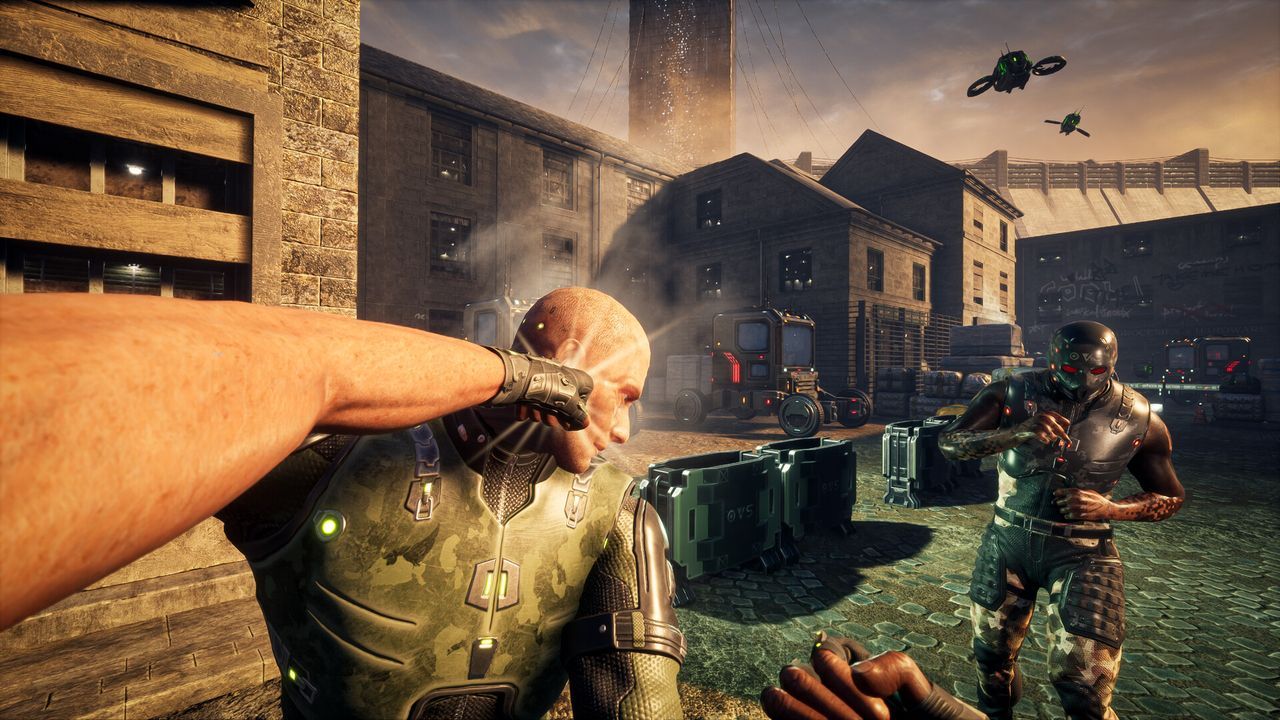
Immersive simulations, like Deus Ex and Dishonored, represent some of the most ambitious and demanding genres in gaming. Creating a truly immersive world requires balancing deep systems with satisfying tactile feedback, a challenge that often pushes indie developers to their limits.
While many experiments in the indie immersive sim space have been intriguing, achieving that essential “feel” can be difficult. For many players, the initial hurdle is the sense of physicality—the feeling of moving and interacting with the world beneath the fingers. This tactile experience is often the gatekeeper to long-term enjoyment.
Fortunately, not all experiments fall short. Some developers manage to nail this feeling, creating experiences that offer a visceral sense of weight and impact. One such example is the indie title Deficit.
Developed by Item42, the game plunges players into the role of a freelance spy navigating a sprawling, dystopian landscape. The mission? Infiltrate the heavily fortified Hadrian’s Wall to steal a critical artifact known as the Interpolator, all under the watchful eye of a mysterious client.
The gameplay fuses the classic immersive sim blend of stealth and shooting with a distinct emphasis on physical combat. Players engage in a fascinating mix of sneaking and brutal brawling, drawing inspiration from action-heavy tie-in games. The melee combat, involving wild swings and powerful jabs with improvised weapons, channels the intensity of classic action, making every physical interaction feel weighty and impactful.
What truly sets Deficit apart is its commitment to physical causality. When players use tools, they don’t just click buttons; they manipulate the environment. Players can use objects to distract guards, deploy traps using mines and laser tripwires, and use batteries to activate or deactivate complex machinery like doors and robotic sentries.
The world itself is highly reactive. Explosions don’t just deal damage; they physically push players around the environment, forcing genuine spatial awareness. Even accidentally throwing an object can have tangible consequences, bouncing off walls and dealing damage, confirming the immersive simulation promise.
However, if there is one area where the development needs refinement, it is the stealth mechanics. While the game offers satisfying aggressive gameplay, the system for hiding remains inconsistent. Enemies often spot players regardless of elevation, making the art of sneaking less about subtlety and more about managing chaos.
Despite these flaws, the game proves that even with imperfect stealth, the core experience remains highly engaging. Playing Deficit is a triumph of physical interaction, offering a genuinely satisfying, chaotic, and deeply tactile experience. The demo is currently available for everyone to try.
Buy on Amazon
Credit