
Loving my gaming notebook setup
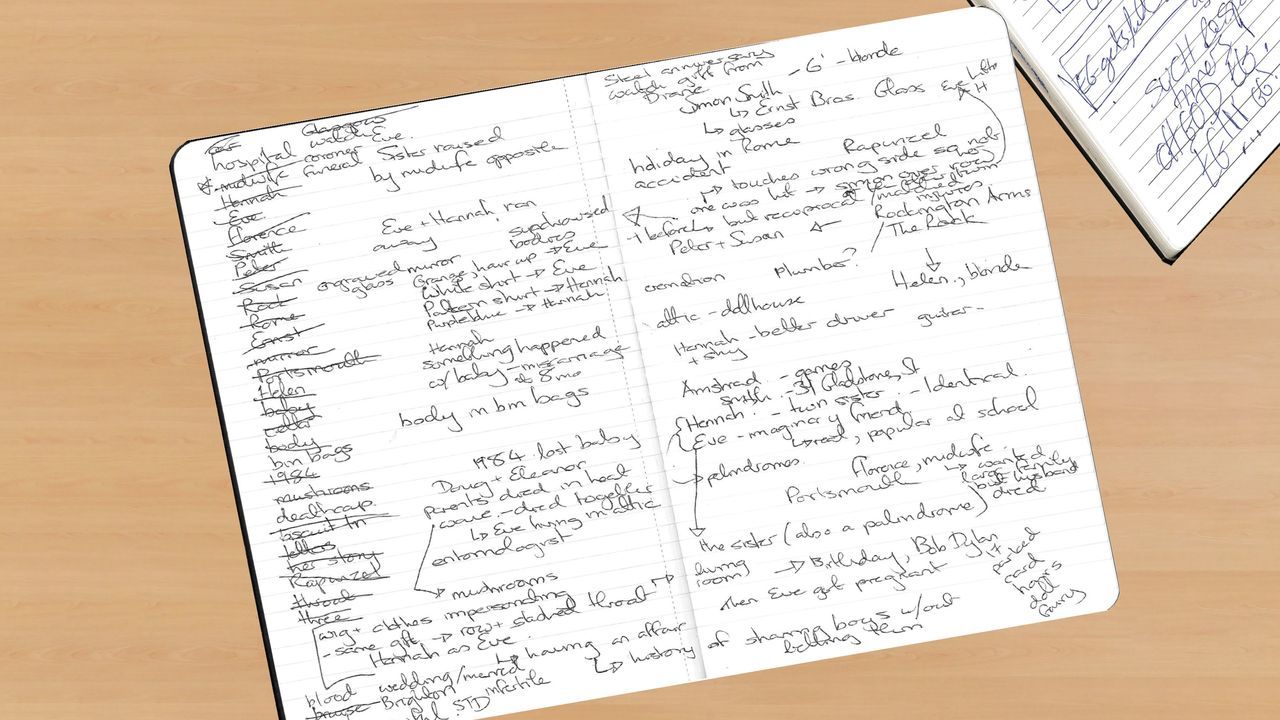
There is a fundamental tension in modern gaming: the seamless, immersive world of digital play versus the satisfying tactile experience of physical interaction. For some, the virtual realm is all-consuming; for others, the true joy lies in the tangible act of exploration. This dichotomy perfectly illustrates why video games and board games coexist so beautifully in our lives—one offers boundless complexity, the other offers physical tokens to hold and boards to construct.
Somewhere in between this digital immersion and real-world physicality is a fascinating space where gaming compels you to take notes. These aren’t just casual scribbles; they are methods of investigation, turning gameplay into an act of detective work.
These are games that allow the experience to spill over into the real world as drawings and words. They demand that we pause, record details, and use language not just for communication, but as a tool to keep complex thoughts straight.
The Art of Digital Detective Work
As you delve into these worlds, scribbling down words or phrases becomes an essential ritual. It allows the experience to transform from passive consumption into active investigation. An odd word here, a fleeting location there, begins to accumulate into a map—arrows guide paragraphs into new routes, setting down roots in blank spaces and fruiting whole new clusters of notes.
Consider games built around narrative mystery, like Her Story. While the game provides vast information, it leaves the crucial task of synthesizing that data open to interpretation. To truly solve the puzzle, a physical notebook becomes indispensable. One page might record the victim’s details and another the local pub where critical clues were found. Keywords—names, locations, outfit changes—are grouped into clusters, tracing the convoluted path of an investigation.
This process transforms raw evidence into visible connections. Instead of having story elements swell on the page, the mind handles the immediate narrative while the notebook acts as a cross-referencing system, grouping suspects and possibilities with visual shorthand. The writing becomes code, using abbreviations and abstractions to capture mental energy.
A similar dynamic is evident in games that rely heavily on pattern recognition and memory, such as Return of the Obra Dinn. When faced with countless objects and names, the physical notepad shifts its role from recording evidence into ruling out possibilities. Circles and numbers group elements, helping to manage a massive influx of detail that would otherwise fade quickly.
Rituals of Record
The habit of documentation extends beyond narrative games into competitive esports as well. For titles like Dota, League, and Smite, establishing a ritual for recording matches provides an invaluable framework. Before a game even begins, listing players, champion choices, and bans serves as both a journalistic reference and a mental anchor, settling the player into the experience.
This practice transforms mere gameplay into a structured record. Recording key kills, unusual item choices, or tense moments—often with quick sketches and bursts of exclamation marks—allows the excitement and mental energy to manifest physically. These notes, whether they are scrawled maps, gold markers nudging against swearwords, or lists of suspects spanning double-page spreads, become some of the most cherished possessions.
The final result is a unique blend: digital pursuit spills into the physical world. It is in these tangible records that the time, excitement, and mental strain of the gaming journey are truly made visible. They are not just notes; they are a tangible testament to the process of discovery.
Buy on Amazon
Credit

