US Navy prints combat drones aboard carrier in rough seas
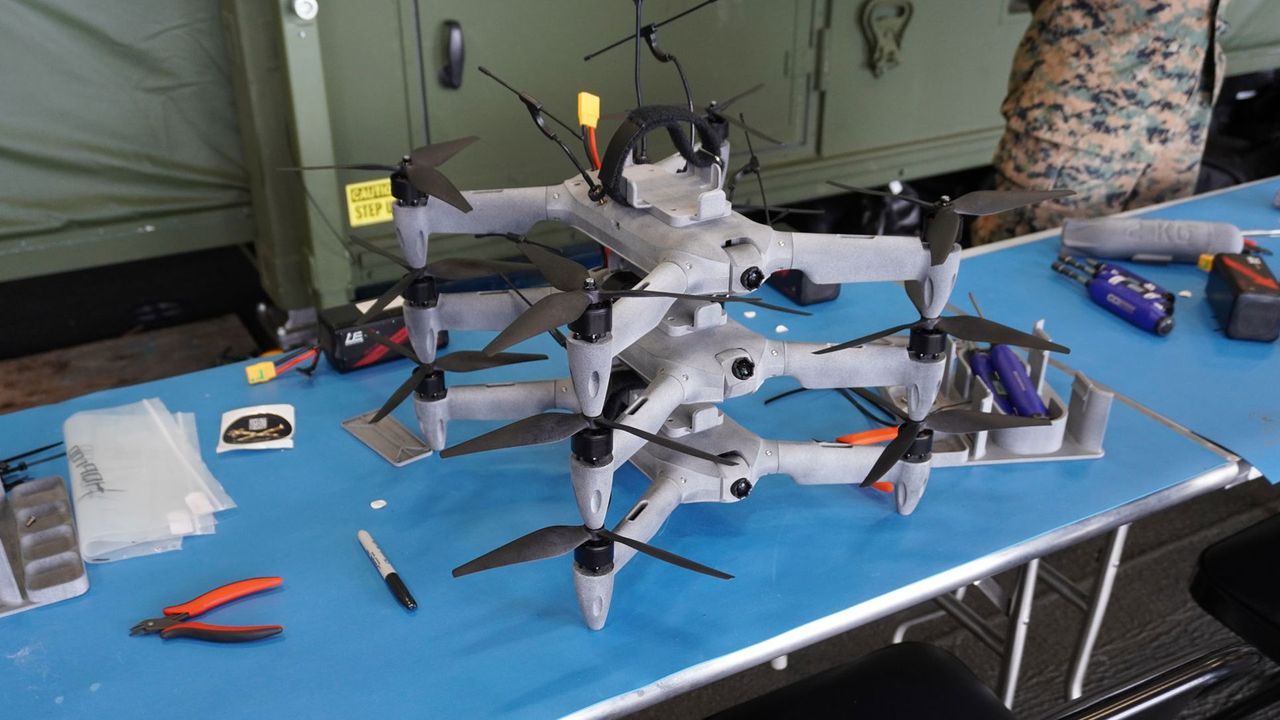
The open ocean doesn’t always present an easy setting for high-tech manufacturing, but during a recent transit to RIMPAC 2026 in Hawaii, a crew aboard the USS Essex found a way to turn turbulent seas into an unprecedented proving ground for advanced production.
A containerized factory, utilizing Firestorm Labs’ xCell expeditionary manufacturing platform, sailed across the Pacific not just with supplies, but with custom-printed technology and critical spares. This mission demonstrated that complex additive manufacturing can thrive in real-world conditions, far from traditional industrial settings.
The xCell system itself is a marvel of portability. It operates within just two expandable 20-foot ISO containers, acting as a self-sufficient workshop. Inside these containers are industrial HP Multi Jet Fusion polymer printers and semi-automated assembly stations, capable of rapid fabrication wherever the vessel sails.
During this voyage, the xCell platform delivered more than just gear; it delivered mission-critical assets. The team printed over 1,000 parts, including vital spares for essential equipment like Apache helicopter rotor droop-stops designed to prevent costly damage during at-sea operations. They also produced a custom vacuum-hose coupling for life preserver testing and various utility items needed by the crew.
Perhaps the most exciting output were twelve flight-ready Squall FPV drones, a flagship product from Firestorm Labs, which are designed for U.S. forces with the motto: Print. Build. Fly. Dominate. These quadcopters boast impressive capabilities, including a range of up to 20 miles, a flight time of up to 42 minutes, and a top speed of 80 mph. They were subsequently flown as adversary aircraft during counter-UAS exercises when the ship arrived at RIMPAC.
This initiative radically redefined logistical operations. Instead of waiting days or weeks for parts to be shipped across contested waters, repairs and manufacturing could occur in hours, right on station. As Firestorm Labs noted, every part printed aboard the vessel was one that didn’t need to be flown or shipped—cutting the fuel, aircraft hours, and personnel required for ship operations.
This expeditionary capability showcases the transformative power of additive manufacturing. It proves that high-tech solutions are not confined to shorelines but can be deployed dynamically in environments where logistics are challenging. The journey transformed a massive transit into a dynamic demonstration of autonomous, on-demand production at sea.
Buy on Amazon
Credit