Windows 11 weather app hogs 1.2 GB of RAM just for a forecast
Windows, the operating system powering billions of devices, is currently navigating a challenging landscape defined by stagnation and bloat. Years of neglect have led to a feeling that the system is struggling to keep pace with modern user expectations, particularly regarding performance, optimization, and privacy.
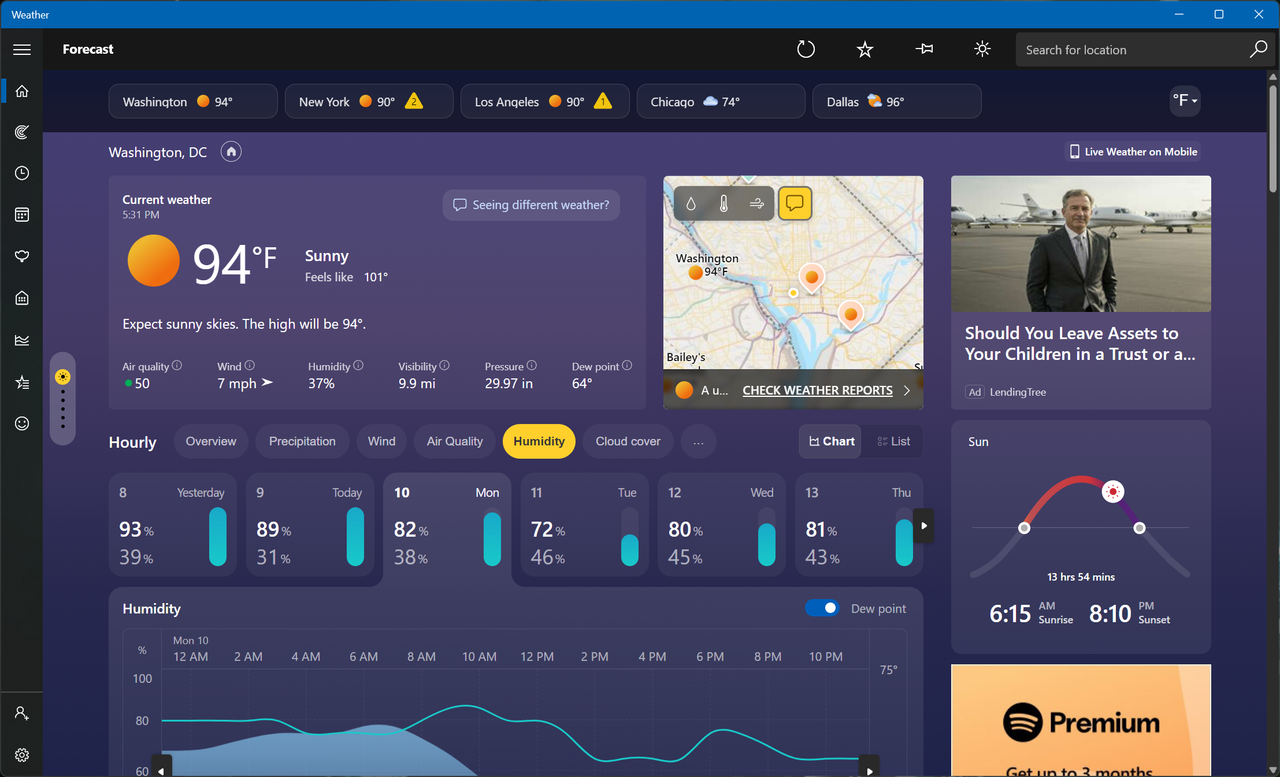
This tension between promise and reality is most vividly illustrated by examining Microsoft’s built-in applications. Take, for example, the default weather application, MSN Weather. While it provides comprehensive data—including live radar, wind forecasts, and air quality index, sourced from providers like Foreca—it comes with significant performance and privacy trade-offs.
When a user checks the temperature, they are not just consuming information; they are running a system that demands substantial resources. Testing has shown this demand is staggering. The MSN Weather application can consume up to 1.2GB of RAM while simply idling, often serving up advertisements in the process.
This situation starkly contrasts with competitors. Apple’s native weather app on macOS offers the same level of beautiful, detailed, and accurate forecasting, yet it is remarkably efficient. The macOS version consumes only about 250MB of memory to display the exact same data, offering a performance difference that feels almost absurd in this context.
The disparity highlights a fundamental architectural difference. MSN Weather functions less like a native application and more like a web wrapper, pulling real-time data by pinging browser tabs. This reliance on web technology means the application is internally tethered to the resource demands of a browser engine, which further compounds the memory usage.
Technical scrutiny reveals that this design choice contrasts with Microsoft’s stated commitment to optimizing Windows 11. While Microsoft has vowed to reduce the operating system’s memory footprint and minimize distractions like persistent tracking or unnecessary background processes—including the experimental AI agents—it has yet to translate these promises directly into tangible improvements for its default services.
The core issue appears to be systemic: even as Microsoft works behind the scenes on updating native apps to the Win32 framework, the memory-intensive MSN services remain largely unchanged. This leaves users in a frustrating position where high-level promises of performance improvement do not reflect in their daily operational experience.
Ultimately, the story of Windows is one of an operating system striving for modern efficiency while wrestling with legacy code and complex architectural choices. The path forward requires more than just theoretical optimization; it demands delivering genuinely streamlined, resource-conscious applications that match the quality set by the competition.
Buy on Amazon
Credit