
Core Ultra 7 vs Ryzen 7 7700X3D faceoff
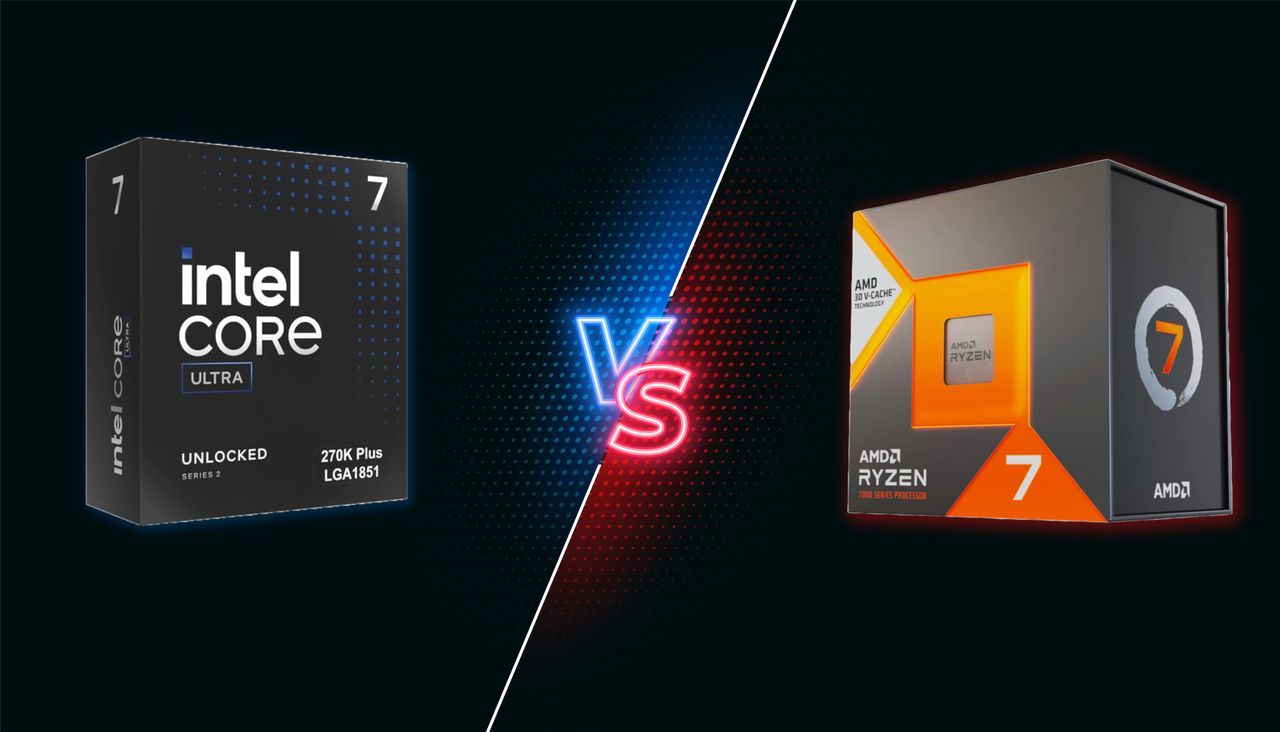
This article provides an in-depth comparison between the Intel Core Ultra 7 270K Plus and the AMD Ryzen 7 7700X3D, focusing on performance, overclocking flexibility, power efficiency, and platform cost.
Here is a structured summary of the key findings:
—
1. Raw Performance & Productivity (Intel’s Strength)
The Intel 270K Plus demonstrates significant advantages in heavy, multi-threaded, and professional workloads:
Multi-Core Dominance: In tasks like Cinebench 2024, POV-Ray, and V-Ray rendering, the 270K Plus significantly outperforms the 7700X3D, often showing leads of 129.5% to 169.5% over the AMD chip.
Video Encoding: For intensive tasks like HandBrake x265 encoding, the Intel chip more than doubles the performance compared to the AMD rival.
Single-Threaded Performance: The Intel chip also leads in single-threaded geomean scores and specific tests, indicating strong responsiveness for general applications.
Conclusion on Performance: For users whose primary focus is heavy 3D rendering, video editing, or demanding multitasking, the Intel 270K Plus is positioned as the superior performer.
2. Overclocking Flexibility (Intel’s Advantage)
The choice between the two heavily depends on the user’s desire for manual tuning:
Intel (270K Plus): As a fully unlocked K-series SKU, the Intel chip offers granular control over voltages and clock speeds via software tools (like XTU), making it highly overclocking-friendly.
AMD (7700X3D): The processor features a locked multiplier, restricting traditional manual overclocking. Performance tuning relies on automated features like PBO2 and Curve Optimizer, which are somewhat limited by the thermal constraints of the 3D V-Cache stack.
Conclusion on Overclocking: Intel wins for enthusiasts who prioritize maximum clock speeds and manual control.
3. Power Consumption, Efficiency, and Cooling (AMD’s Advantage)
When looking at efficiency in real-world workloads, the AMD processor demonstrates a clear edge:
Power Draw: The 7700X3D is significantly more power-efficient, requiring far less power for similar throughput tasks. For example, in HandBrake x265 encoding, AMD draws only 65W, compared to Intel’s higher consumption.
Performance per Watt: In traditional multi-threaded benchmarks like Cinebench, the 7700X3D achieves better performance-per-watt (e.g., 14.4 points/watt vs. 10.4 points/watt for Intel).
Cooling Implications: The higher power draw of the Intel chip demands a more robust cooling solution (like a 360mm AIO), while the AMD chip is easier to manage with mid-range coolers.
Conclusion on Efficiency: AMD wins when prioritizing thermal efficiency and overall power management.
4. Pricing & Platform Value (AMD’s Advantage)
The total cost of ownership places the AMD platform in a more budget-friendly position:
Platform Cost: The AMD setup allows for more economical motherboards (B650 vs. necessary Z890 for Intel).
Overall Value: Despite the high cost of DDR5 memory, the lower overall platform cost and superior gaming efficiency make the 7700X3D the smarter financial play for a majority of users.
Future-Proofing: The AM5 socket offers a clear upgrade path for future CPU generations, whereas Intel’s platform migration is less certain.
—
Final Verdict
The comparison results in a tie depending entirely on the user’s primary goal:
In short: If you are a heavy workstation user focused on pushing rendering limits, choose the Intel 270K Plus. If you are a gamer or general user prioritizing excellent efficiency, lower platform cost, and future-proof value, the AMD Ryzen 7 7700X3D is the more compelling choice.
Buy on Amazon
Credit