
Cerebras shares plunge AI cloud revenue soars 281%
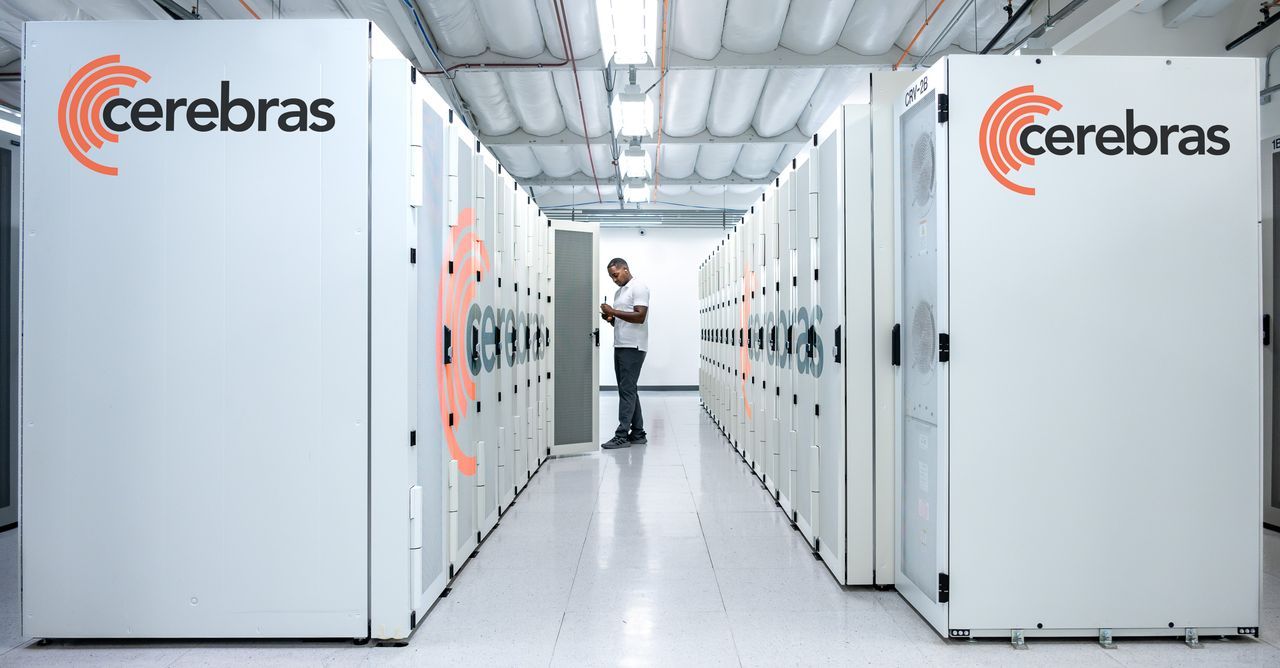
When Cerebras released its second-quarter financial results, the market was caught between a spectacular growth story and a challenging operational reality. While the company’s earnings nearly doubled year-over-year, the stock immediately took a sharp dive, underscoring the turbulent waters of transitioning from a hardware vendor to an infrastructure provider in the booming AI era.
The story of the quarter was one of stark contrasts. Revenue for the period ended at $180.11 million, showing significant growth compared to the previous year. This overall success was heavily driven by cloud services, which exploded by a staggering 281%, soaring from $33.03 million a year ago to $125.99 million.
However, beneath this revenue boom lay a growing strain. Sales of the company’s physical hardware actually declined by 23% year-over-year, dropping from $70.3 million in Q2 2025 to $54.12 million. This discrepancy immediately framed the central business narrative: clients were increasingly opting to access compute power rather than owning the machines themselves.
This shift highlights a fundamental change in how AI infrastructure is valued. Previously, Cerebras operated on a traditional model where they manufactured specialized engines and sold systems. Today, success hinges on delivering massive amounts of compute capacity via the cloud, effectively selling access to AI training and inference capabilities over time.
The financial picture was further complicated by significant investment in this new direction. Operating expenses soared to $502.79 million, driven largely by stock-based compensation triggered by the company’s recent IPO. This recognition of compensation caused the net loss for the quarter to jump considerably, masking the underlying operational success.
Despite the volatility caused by these accounting factors, analysts were less concerned with the reported loss and more focused on the strategic pivot. They recognized that missing expectations stemmed not from poor performance overall, but from the uncertainty surrounding the returns generated by this complex new business model.
The stakes are incredibly high, especially when looking at landmark agreements like the $20 billion deal with OpenAI. This partnership requires Cerebras to fund vast infrastructure buildouts—like providing 750 MW of inference capacity over several years—long before revenue is realized. The challenge now is transitioning successfully from spending enormous capital on hardware and infrastructure to generating attractive, sustainable profits from providing this essential AI compute.
Buy on Amazon
Credit