
DOOM runs inside Paint built by a Microsoft executive
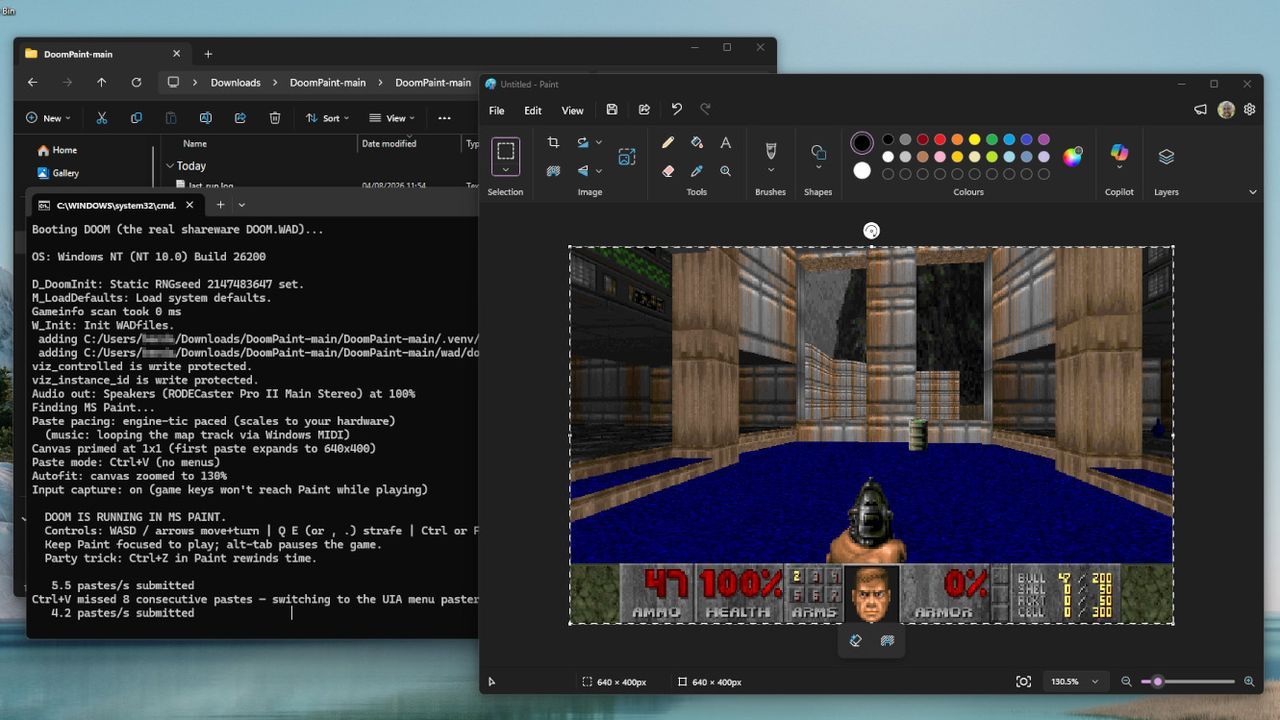
When you think of Microsoft Azure and cutting-edge cloud infrastructure, you probably don’t picture a fellow who spends his downtime diving deep into the world of 1990s FPS games. Enter Mark Russinovich, the CTO of Microsoft Azure, who has taken a wonderfully bizarre path by proving that some things can be done in the most unexpected places—and the most ironically simple tools.
Russinovich has found a unique playground where high-level technology meets retro nostalgia: DoomPaint. This project brilliantly forces a confrontation between massive modern computing power and the simplicity of classic Windows applications. Instead of launching complex game engines, Russinovich has leveraged Microsoft Paint to act as a bizarre monitor, rendering frames of the legendary DOOM game directly onto the canvas.
The result is a visual spectacle that defies expectation. While performance varies from smooth to sluggish, it embraces its limitations. As one participant noted, the framerate itself is part of the charm, highlighting the absurdity of running an intense shooter through a basic drawing program. This experiment isn’t about raw computing power; it’s about the philosophical gap between visual representation and actual computation.
The core irony of DoomPaint lies in its simplicity. As Russinovich put it, Paint merely renders the game but does not compute it. It computes nothing. This distinction is the punchline: a piece of basic software handles the display, while the underlying reality remains entirely external.
This digital paradox feeds into a fascinating subculture where modern AI tools are used to support retro endeavors. The project has seen commits from entities like Anthropic’s Claude and Microsoft’s GitHub Copilot, suggesting a deeply “vibe-coded” approach to resurrecting classic titles. It offers a unique window into the downtime of a major technology executive, blending his professional interests with deep-cut gaming history.
Beyond the novelty of using Paint as a screen, the project incorporates genuine retro game elements. By integrating legitimate internal files from source ports like UZDoom, participants can access the complete selection of levels and weapons for DOOM, turning this oddity into an actual playable experience.
It’s a testament to the joy found in creative constraint. Whether you are running complex infrastructure or playing with digital crayons, the goal remains the same: to find new, unexpected ways to interact with technology and celebrate the classics. For anyone looking to explore the strange intersection of high-tech leadership, vintage gaming, and pure digital whimsy, DoomPaint offers a truly unique perspective.
Buy on Amazon
Credit