
Noctua’s Custom Test Rigs: The Scariest Fans Testing Ever
When you think of gaming peripherals, you usually think about precision, speed, and flawless ergonomics. But what happens when you introduce a fan? Noctua, a name synonymous with cooling excellence, decided to push the boundaries by integrating airflow directly into their Feinmann F01 Noctua Edition gaming mouse.
The idea is simple: cool down those sweaty palms instantly. The result is a device that actively blows air onto your hand while you game, promising a remarkably pleasant thermal experience. Yet, to ensure this innovation could survive the brutal reality of competitive gaming—where mice are tossed and tormented—Noctua didn’t just trust the design. They unleashed their custom-built torture-test rigs.
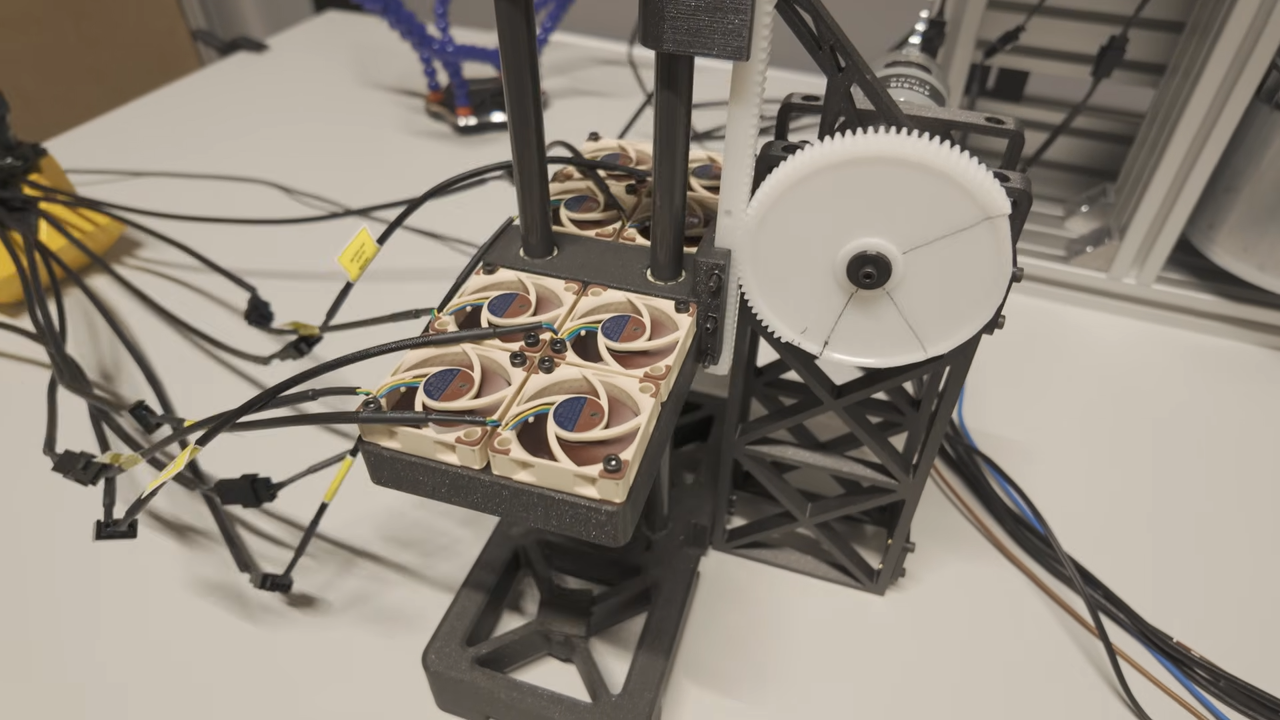
These weren’t casual checks; these were extreme endurance tests designed to see if a fan could withstand the punishing forces gamers inflict on their gear. One of the early trials involved simulating intense lateral movement, rapidly swinging the mouse left and right at speeds up to 30 movements per second. The goal was simple: survive the sideways ballet of hardcore gaming.
The results from these rigorous sessions tell a story of impressive resilience. In one horizontal test pushing fans back and forth rapidly, the components endured up to 280,000 cycles before one fan failed. Interestingly, the failure wasn’t the fan itself, but a bearing issue with the tape holding it in place—a testament to the durability of the core mechanism.
The ultimate stress test came in the form of a vertical drop. Eight fans were subjected to repeated impacts, surviving 20,000 drops without immediate failure. But Noctua didn’t stop there. To simulate even more brutal real-world impact, they continued the testing. After another five thousand drops, the specialized foam padding used to cushion the impact was shattered, meaning the force exerted on the unit became significantly higher than previously measured.
Even under this extreme pressure, the fans remained surprisingly functional. While some of the bearing lock-rings failed during the deeper stress tests, and impellers popped out due to the intense forces, the core cooling system held up remarkably well. The fact that the unit survived such intense physical abuse suggests a robust engineering foundation.
It seems this innovative mouse is built for the big league. By subjecting it to these extreme conditions, Noctua has validated that their design isn’t just about cutting-edge cooling; it’s about creating hardware that can genuinely withstand the rigors of professional gameplay. Now, all that’s left is to see how this fusion of cooling and kinetic force performs in the demanding environment of a game.
Buy on Amazon
Credit

