
RTX 5060 Ti bent in half PCB save restores full power
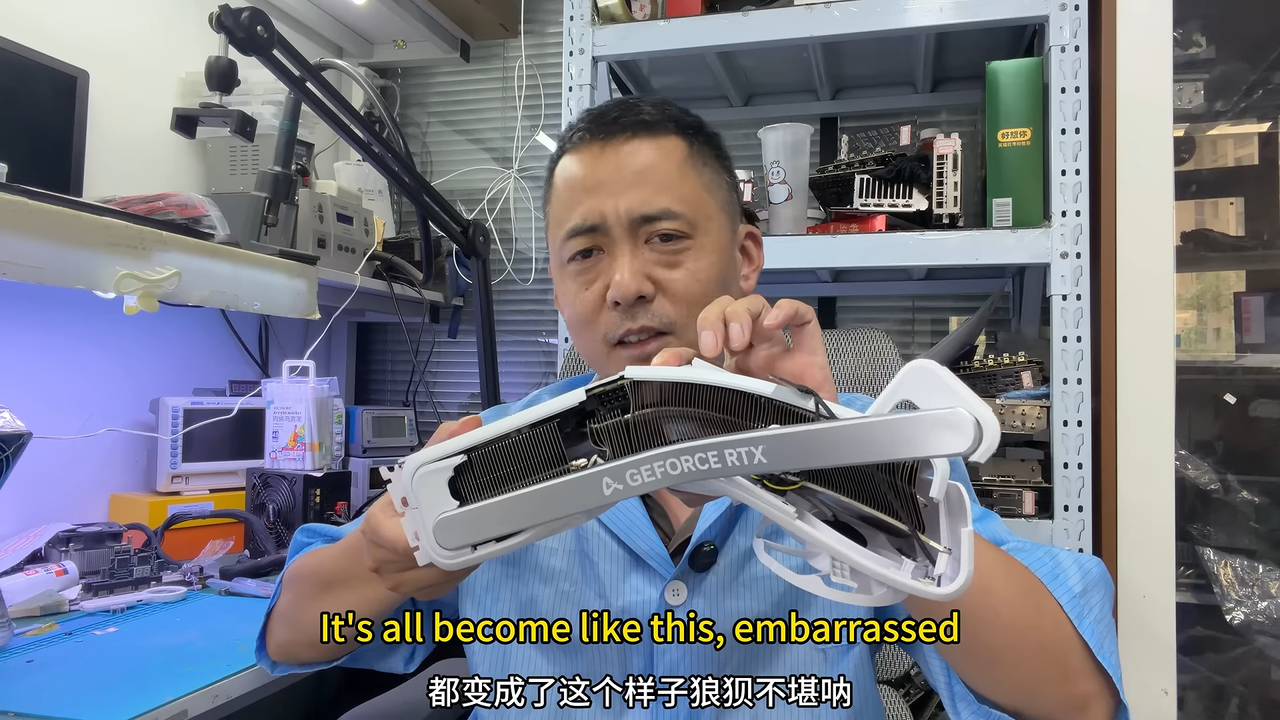
Buying a new graphics card is usually a moment of pure joy, but for one customer in China, the celebration took an unexpected detour into disaster. Right after acquiring an AX Gaming RTX 5060 Ti, the purchase was interrupted by a serious car crash that ended up totaling the vehicle—and the GPU along with it.
When the dust settled, the damage to the card looked catastrophic. The backplate and cooler were completely destroyed, making it clear that salvaging such a midrange component would be an exercise in immense difficulty due to the notoriously high labor costs associated with repair work. It seemed like a dead end for anyone looking to recover value.
Enter Brother Zhang, a technician who decided that even bent components deserve a shot at life. With the external structures gone, he performed an unconventional separation of the PCB from its destroyed heat sinks. Fortunately, this specific variant of the 5060 Ti utilized a relatively short PCB, which meant the core components were mostly intact despite the severe physical trauma.
The initial assessment was positive: power rail resistance checks confirmed that the core and memory modules were not dead. But simply having functional circuitry wasn’t enough; the visual damage suggested instability. Brother Zhang’s next move was equally inventive. To address the cooling deficit, he engineered a makeshift solution by carefully straightening the bent fin stack and securing two 120mm fans onto the card using zip ties, creating an improvised cooling system.
Despite the ingenious cooling setup, the card still exhibited instability when attempting to install drivers, resulting in black screens and hard crashes. This pointed to a deeper issue within the board itself. Taking further action, Brother Zhang carefully inspected the PCB and focused his attention on the point of maximum stress: the flex point. He decided that the memory module closest to the edge, which had endured the most torque, was the likely culprit.
With precision, he performed a delicate removal and reapplication of the solder on the memory module. This simple yet crucial fix resolved all stability issues, successfully restoring the card’s identity as a functional 5060 Ti with the full 8GB of VRAM.
The final tests confirmed that the survivor was indeed a powerhouse. During benchmarking, temperatures stabilized at a respectable 64°C under Furmark stress without visual artifacts. Furthermore, running a rigorous 3DMark loop validated the PCIe 5.0 x8 link speeds with a high stability score of 98.9%. The card demonstrated remarkable resilience and proved to be a true survivor.
Buy on Amazon
Credit