
Smallest GPU passes testing renders 3D graphics
The Quest for Tiny Power: How Open-Source Silicon is Redefining Graphics
In the world of high-performance computing, the pursuit of processing power often involves massive, sprawling architectures. But what happens when you realize that complex visual rendering doesn’t require colossal silicon? A small but determined group of designers is proving that the future of graphics might be packed into an astonishingly tiny package, bringing cutting-edge capabilities to life on hardware so small it barely fits in your palm.
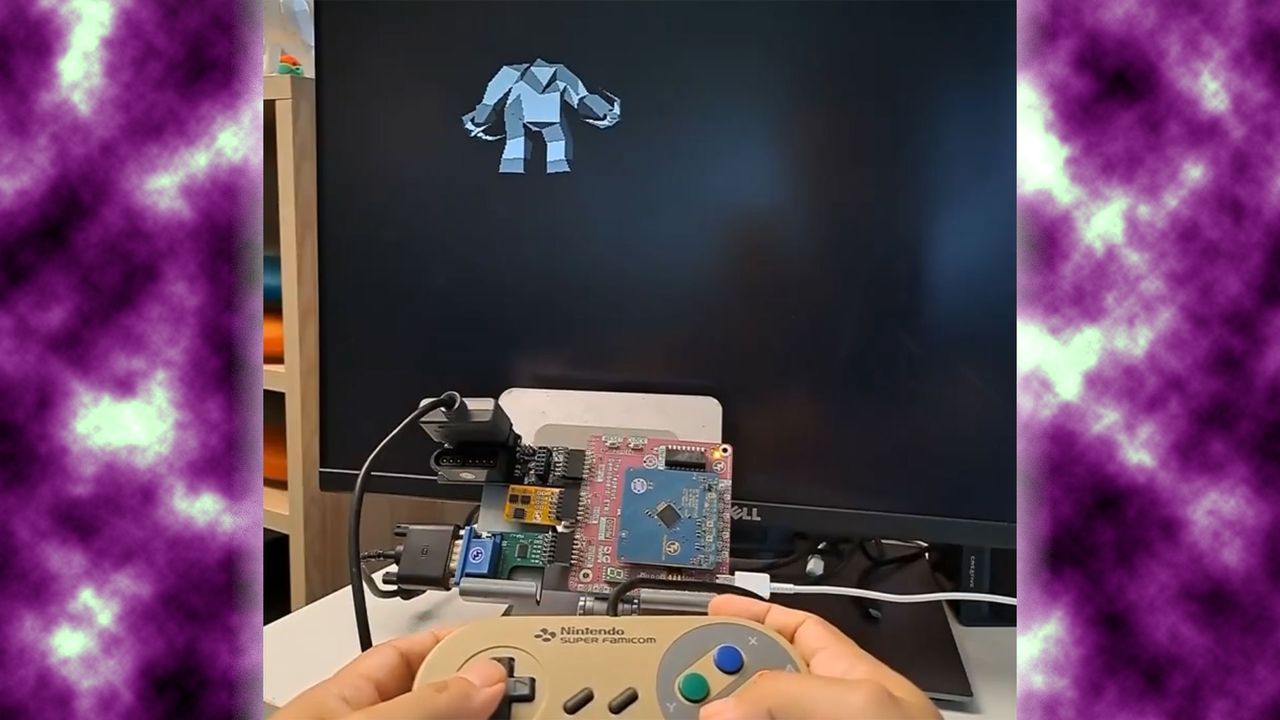
The excitement reached a fever pitch last November when the development of the TinyGPU project achieved a major milestone: the release of finished silicon. This groundbreaking achievement, stemming from the Tiny Tapeout community, allowed developer Pongsagon Vichit to receive the physical hardware back from the SKY 25b shuttle, confirming that the ASIC TinyGPU v2.0 is alive and working.
This initial iteration of the GPU is a testament to ingenuity. Despite its diminutive size—packing around 240,000 transistors—the TinyGPU v2.0 manages to perform complex visual tasks in real-time. It can handle transformation and lighting along with rasterization, capable of rendering 3D images manipulated by a gamepad with up to 1,000 triangles on screen. It features dynamic directional lighting and flat shading, demonstrating that even minimal hardware can deliver engaging visual experiences.
While the performance demonstrated during testing was initially limited by the host FPGA environment, the underlying potential of this silicon is undeniable. The focus now shifts to pushing those boundaries further, leading to the highly anticipated TinyGPU v3.0.
The next generation promises a significant leap in fidelity by incorporating a programmable pixel shader—a feature long sought after in consumer graphics cards. This new architecture is designed to deliver rich textures and animations while maintaining impressive performance, hinting at potential gains without sacrificing speed.
Details released for the TinyGPU v3.0 pixel shader reveal a lightweight design inspired by historical innovations, offering SIMD capabilities and instruction sets that allow for sophisticated rendering with remarkable efficiency. By integrating this programmable shader with Z-buffer access and advanced culling techniques, developers are anticipating models that are far more detailed and animated than ever before.
The journey from concept to silicon has been marked by relentless collaboration within the open-source hardware community. The excitement is now focused on the delivery timeline for this next iteration. Information suggests that the finished TinyGPU v3.0 ASIC is expected to be delivered in late 2026 or early 2027, signaling a rapidly accelerating pace in the development of independent silicon.
Buy on Amazon
Credit

